
 English
 Español
 عربى
عربىContent
- 1 Single Wall Paper Cups: Construction, Applications, and Where They Fit in the Disposable Cup Market
- 2 How Single Wall Paper Cups Are Made
- 3 Paper Cup Cold Drink Service: What to Specify and Why It Matters
- 4 Are Paper Cups Microwavable?
- 5 Sustainability, Recyclability, and What the Labels Actually Mean
Single Wall Paper Cups: Construction, Applications, and Where They Fit in the Disposable Cup Market
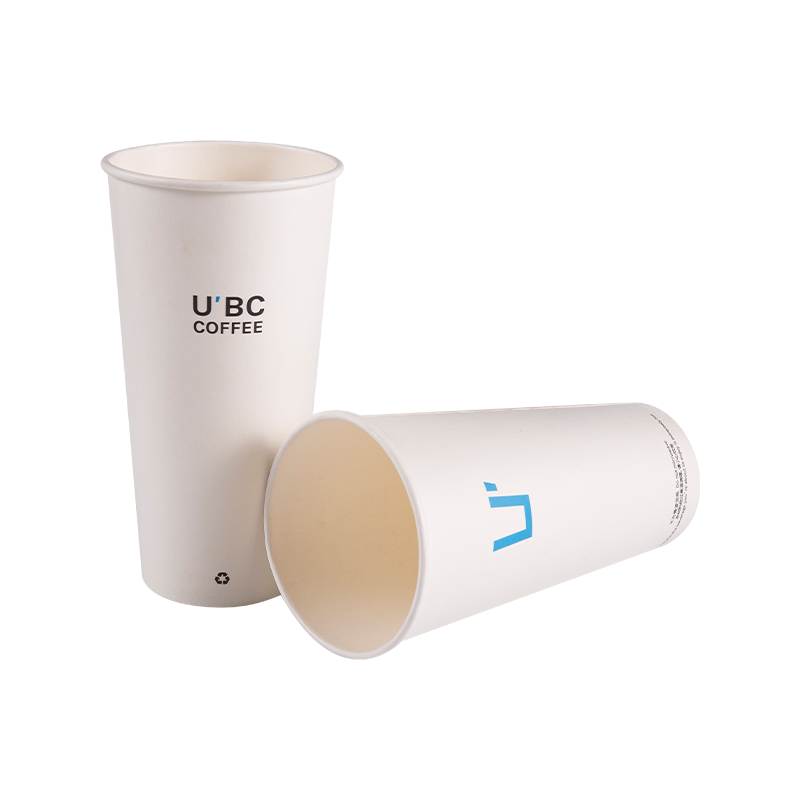
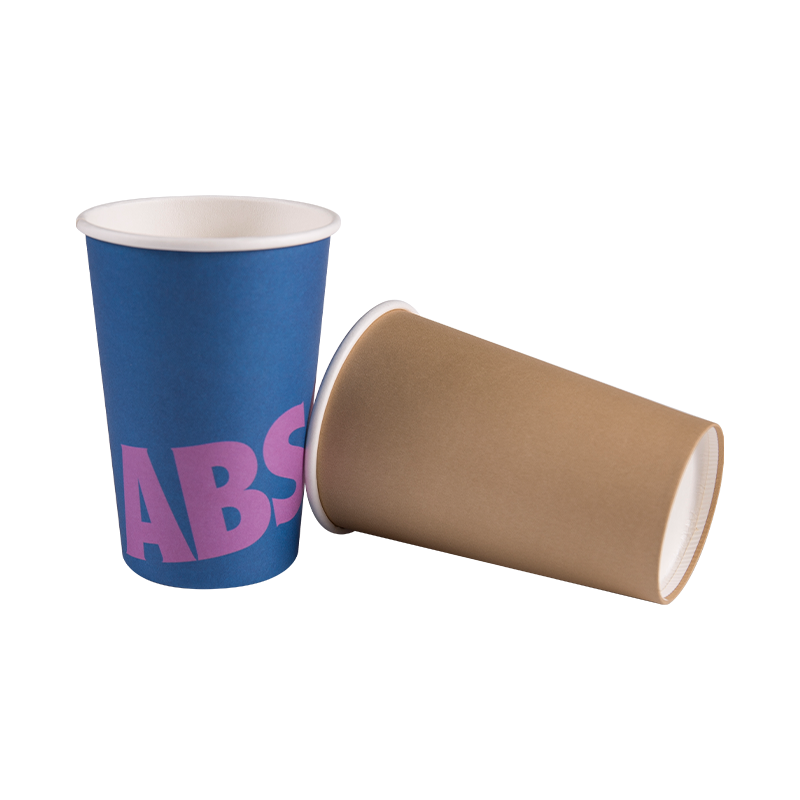
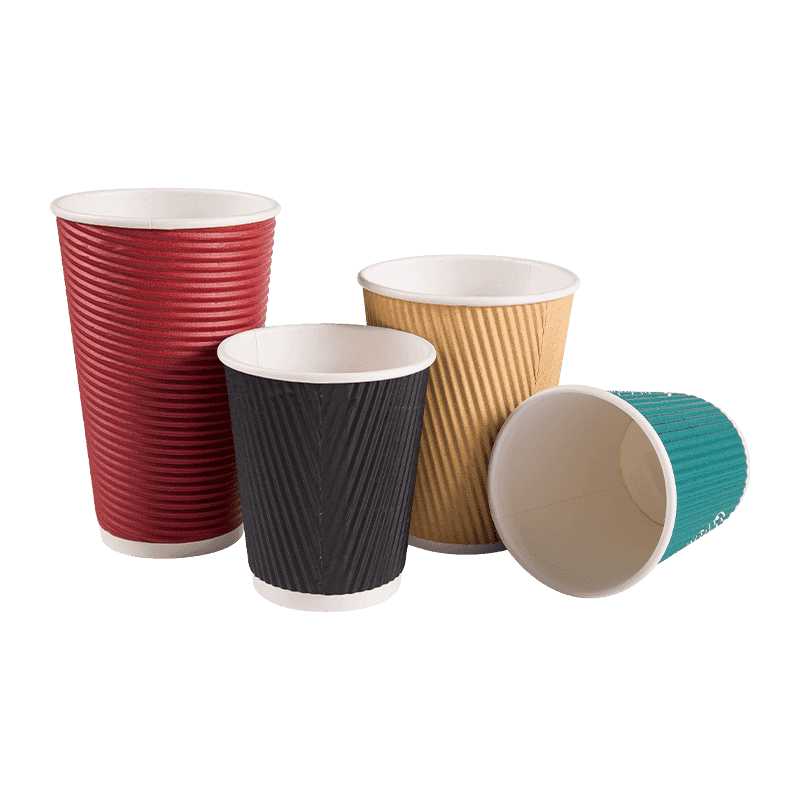
Single wall paper cups are the most widely manufactured disposable cup format in the world — used in everything from office water coolers and fast-food cold drink service to vending machines and self-service beverage stations. Their defining structural characteristic is a single layer of paperboard with an interior lining, as opposed to double wall cups (which add an outer insulating layer) or foam cups (which use expanded polystyrene for insulation). That single-layer construction makes them the lightest, most compact, and lowest-cost option per unit, but it also sets clear limits on what they can handle in terms of heat and hold time.
Understanding those limits — what single wall paper cups are engineered to do, what interior linings make them suitable for different liquids, and where the boundaries of their use actually lie — prevents both practical problems at the point of service and compliance issues in foodservice operations.
How Single Wall Paper Cups Are Made
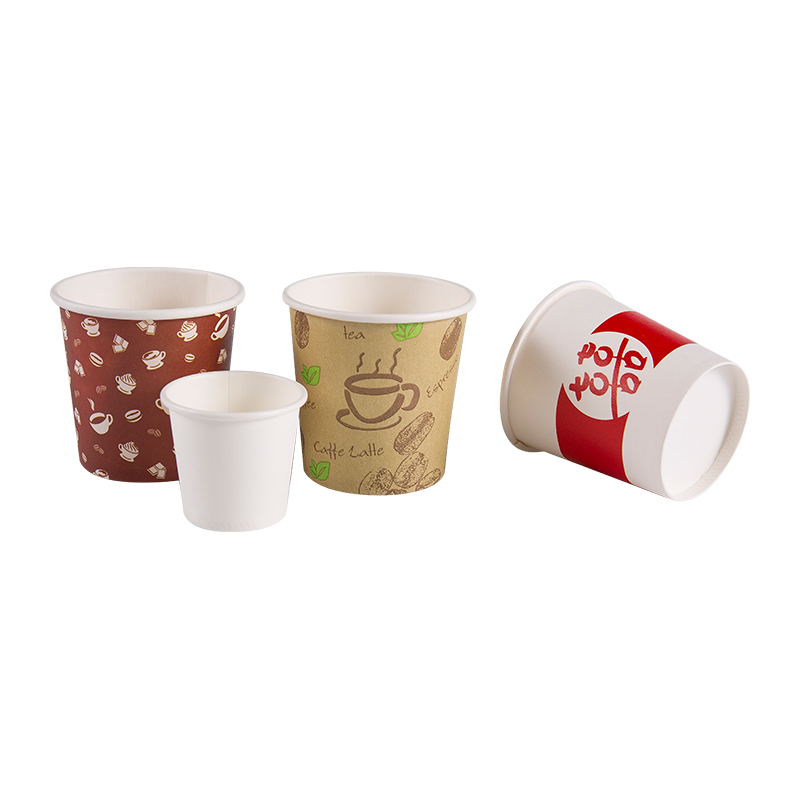
The structural component of a single wall paper cup is a food-grade paperboard blank, typically 170–350 gsm depending on cup size and intended use. Smaller cups (3–9 oz / 90–270 ml) used for cold water or juice use lighter stock; larger cups (12–32 oz / 355–950 ml) for cold drinks at quick-service restaurants use heavier stock to maintain structural integrity under the weight of ice and liquid.
The paperboard alone is not liquid-resistant. An interior lining is applied during manufacturing to prevent the paper fibers from absorbing moisture, which would cause the cup to soften and eventually fail. The three main lining technologies in current use are:
- PE (polyethylene) lining — the traditional standard. A thin PE film is extrusion-coated onto the paperboard interior, creating an effective moisture barrier. PE-lined cups are widely available and low in cost, but the PE coating complicates recycling because the paper and plastic must be separated before either can be processed. Most conventional single wall paper cups on the market use PE lining.
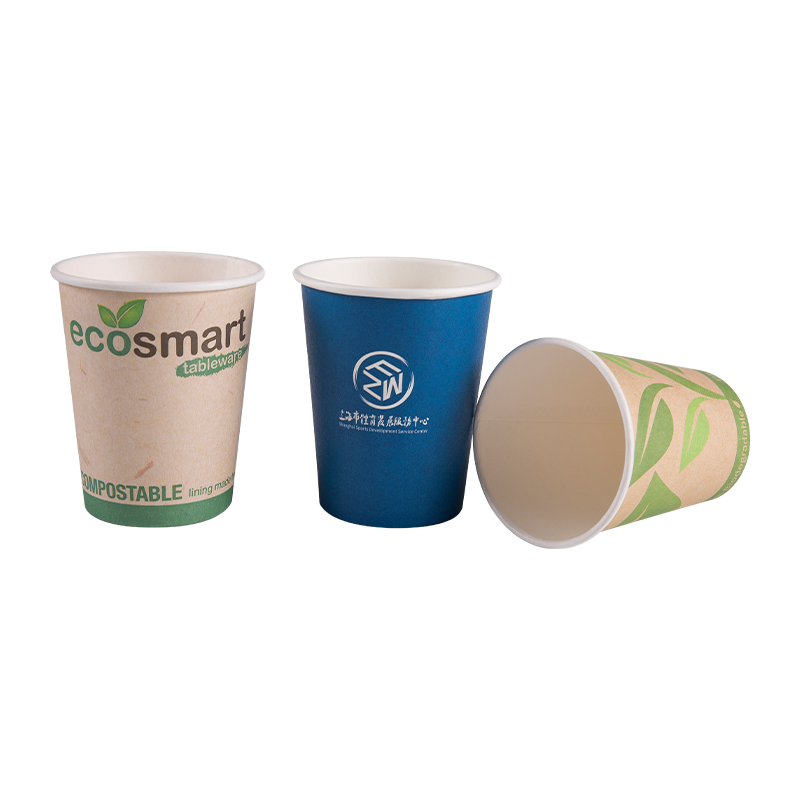
- PLA (polylactic acid) lining — a bio-based alternative to PE derived from corn starch or sugarcane. PLA-lined cups are marketed as compostable under industrial composting conditions (EN 13432 / ASTM D6400), but require temperatures above 58°C sustained for several weeks to break down — conditions not found in home compost bins. PLA-lined cups are not suitable for hot beverages above approximately 40°C, as the lining softens and the cup loses structural integrity.
- Aqueous (water-based) coating — a newer category designed to improve recyclability by eliminating the discrete plastic film layer. Aqueous-coated cups are accepted by more paper recycling streams than PE-lined cups, though moisture resistance and grease resistance are generally lower than PE-lined equivalents. Performance in high-humidity or prolonged cold drink service may vary by product.
Paper Cup Cold Drink Service: What to Specify and Why It Matters
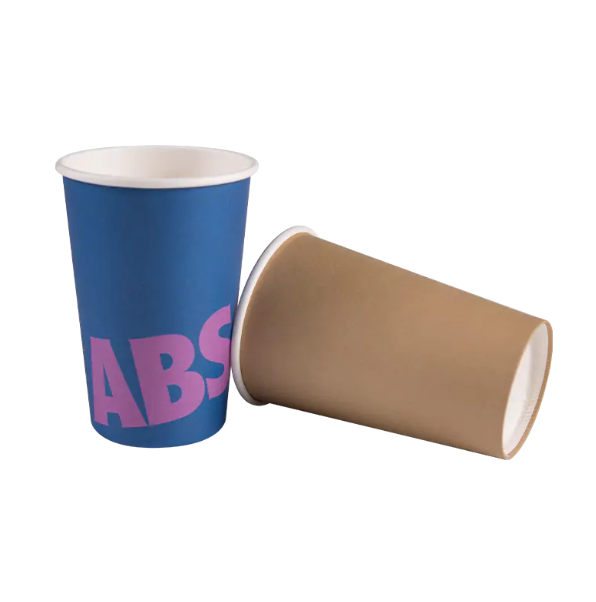
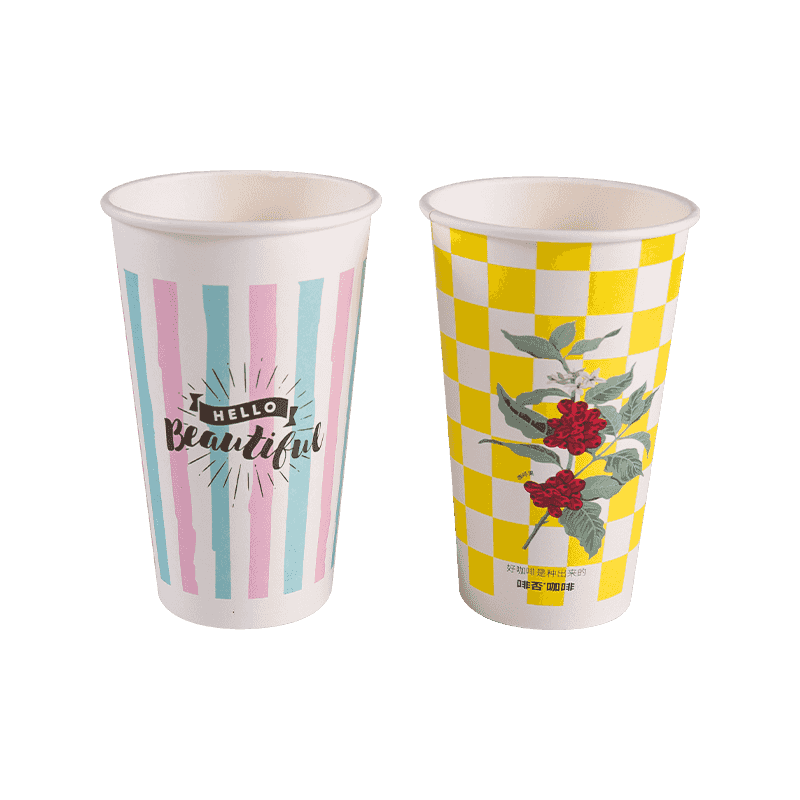
Paper cups for cold drink service are a distinct specification category from hot drink cups, and using the wrong type in either direction creates predictable service problems. A cup designed for cold drinks is optimized for condensation resistance, structural rigidity under refrigerated temperatures, and compatibility with lids designed for iced beverages. A hot cup used for a cold iced drink will soften faster on the exterior as condensation saturates the uncoated outer surface.
Cold Cup Design Features
Single wall paper cups for cold drink service incorporate several design elements that distinguish them from their hot drink counterparts:
- Wax or PE exterior coating — in addition to the interior lining, cold drink cups designed for iced beverages often carry an exterior wax or PE coating that prevents condensation from being absorbed by the outer paper layer. Without this, the cup softens within minutes of being filled with an iced drink, particularly in warm or humid environments.
- Wider mouth and flared rim — cold drink cups are sized to accept dome lids with straw holes or flat sip-through lids, rather than the hot cup lids that fit recessed rims. Lid compatibility is cup-size and manufacturer-specific; a 16 oz cold cup from one supplier may not accept lids from another even at the same nominal size.
- Heavier stock for large sizes — a 32 oz cold drink cup filled with ice and liquid weighs approximately 1 kg. The paperboard stock must be heavy enough to maintain its cylindrical form and handle integrity under that load without the structural support that a double wall construction would provide.
Common Cold Drink Cup Sizes and Their Applications
| Cup Size | Typical Volume | Common Applications |
|---|---|---|
| Small | 8–12 oz (240–355 ml) | Juice service, kids' meals, water coolers |
| Medium | 16–22 oz (475–650 ml) | Standard QSR cold drinks, iced coffee, smoothies |
| Large | 24–32 oz (710–950 ml) | Large format cold drinks, stadium service, convenience stores |
| Extra Large | 44–52 oz (1,300–1,540 ml) | Convenience store fountain drinks, value-size QSR |
How Long Does a Paper Cold Cup Hold Up?
A properly specified single wall paper cold cup — with exterior coating and correct interior lining — maintains structural integrity for 30 to 60 minutes with an iced drink under typical ambient conditions. Beyond that window, condensation and cold absorption progressively soften the exterior paper layer, and the cup becomes noticeably limp at the handle zone. For self-service or carry-out applications where cups may be held for longer periods, double wall cold cups or insulated sleeves extend this window significantly. For rapid-consumption QSR service, single wall cold cups are entirely appropriate and represent the most cost-effective choice.
Are Paper Cups Microwavable?
The short answer: most paper cups are not safe to microwave, and the exceptions require explicit manufacturer confirmation. The nuance matters because the paperboard itself is not the issue — it is the interior lining and the adhesive used to seal the cup seam that determine microwave safety.
Why Standard Paper Cups Should Not Go in the Microwave
- PE lining and heat — the polyethylene film coating the interior of most paper cups has a melting point of approximately 120–130°C. Microwave heating of liquid-filled cups is unlikely to reach that temperature in the liquid itself, but localized hot spots near the cup wall — particularly if the cup is not full — can cause the PE lining to soften, warp, or partially separate from the paperboard. This compromises the cup's structural integrity and may allow PE to contact the beverage in ways not intended by the manufacturer's food contact approval.
- Wax coatings — wax-coated cups (common in older cold drink formats) have a significantly lower thermal tolerance than PE. Wax melts at 55–65°C and will begin to deform and migrate into the beverage at microwave-achievable temperatures. Wax-coated cups should never be microwaved.
- Seam adhesives — the side seam of a paper cup is bonded with a heat-seal adhesive not formulated for microwave exposure. In extended microwave cycles, seam adhesives can soften and allow the cup to open at the seam, releasing the liquid.
- Metal inks on printed cups — metallic inks used in cup decoration may contain materials that arc in a microwave, producing sparks. Most commercial cups use non-metallic inks, but this cannot be assumed without checking the specific product specification.
Microwave-Safe Paper Cups: What Makes Them Different
A subset of paper cups is specifically manufactured and tested for microwave use. These cups use either a microwave-stable aqueous coating or a thin CPET (crystallized polyethylene terephthalate) lining rated to higher temperatures than standard PE, combined with a seam adhesive system tested for microwave exposure. They carry explicit microwave-safe labeling — typically the microwave symbol (wavy lines) — and are certified under FDA 21 CFR or EU food contact material regulations for microwave use.
Microwave-safe paper cups are a niche product segment and are not the same as standard hot drink cups, even if both are designed for warm beverages. A standard single wall hot cup — the type used at coffee shops — is engineered for hot beverage service, not for microwave reheating. The distinction matters: heating a standard hot cup in a microwave for 60–90 seconds at full power is sufficient to soften the PE lining and potentially deform the seam.
Practical Guidance
If a paper cup does not carry an explicit microwave-safe symbol from the manufacturer, transfer the contents to a ceramic or glass container before microwaving. This is not overcautious — it is the correct use of a product not designed or tested for that application. For foodservice operators considering microwave-safe cup options for soup, ramen, or reheatable beverages, specify cups that carry documented microwave compliance from the manufacturer and verify that the compliance covers the power level and duration relevant to the intended use.
Sustainability, Recyclability, and What the Labels Actually Mean
Paper cup sustainability claims are among the most frequently misunderstood in the disposable packaging category. Several distinctions are worth establishing clearly for buyers making specification decisions based on environmental criteria.
Recyclable does not mean recycled in practice. Single wall PE-lined paper cups are technically recyclable where specialist paper cup recycling infrastructure exists — the PE lining can be separated from the fiber in a hydropulping process — but this infrastructure is not universally available. In the UK, dedicated cup recycling schemes handle an estimated 5–10% of the approximately 2.5 billion paper cups used annually. In most markets, PE-lined cups that reach a standard paper recycling stream are rejected and landfilled or incinerated.
Compostable applies only under specific conditions. PLA-lined cups certified to EN 13432 or ASTM D6400 will biodegrade in industrial composting facilities maintaining sustained temperatures above 58°C with appropriate humidity and microbial activity. They will not meaningfully biodegrade in home compost, and they are rejected by most paper recycling streams because PLA contamination interferes with paper pulp quality. Compostable cups are a genuinely useful option only where a closed-loop industrial composting collection system is in place at the point of use.
Aqueous-coated cups currently offer the clearest path to mainstream paper recycling stream acceptance, as they avoid the separate plastic film layer entirely. However, moisture resistance performance must be evaluated against the specific use case, as aqueous coatings vary in their barrier properties across manufacturers and product grades.
For buyers navigating these distinctions, the most actionable approach is to identify the end-of-life infrastructure actually available at the point of use — composting collection, dedicated cup recycling, or standard paper recycling — and then match the cup specification to what that infrastructure can actually process.
 +86-0563-8029081
 +86-0563-8029081
 No. 12 Sanxi Road, Xinqiao Development Zone, Jingde Country, Xuancheng City, Anhui Province.