
 English
 Español
 عربى
عربىCup lid choice looks simple until it isn't — the wrong material warps under hot beverages, the wrong seal leaks in transit, and the wrong claim of "eco-friendly" doesn't hold up under scrutiny. Getting lids right means matching material to beverage temperature, understanding what recyclability and biodegradability actually require, and knowing which seal design suits which use case.
Content
- 1 Plastic Cup Lids: The Basics
- 2 Disposable Cup Lids: Common Types
- 3 Plastic Cup Lid Materials
- 4 PP Plastic Cup Lids
- 5 PET Cup Lids
- 6 Eco Friendly and Sustainable Cup Lids
- 7 Biodegradable Cup Lids
- 8 Recyclable Plastic Cup Lids
- 9 Custom Disposable Cup Lids
- 10 Injection Molded Cup Lids
- 11 Food Grade Plastic Cup Lids
- 12 Leak Proof Cup Lids
Plastic Cup Lids: The Basics
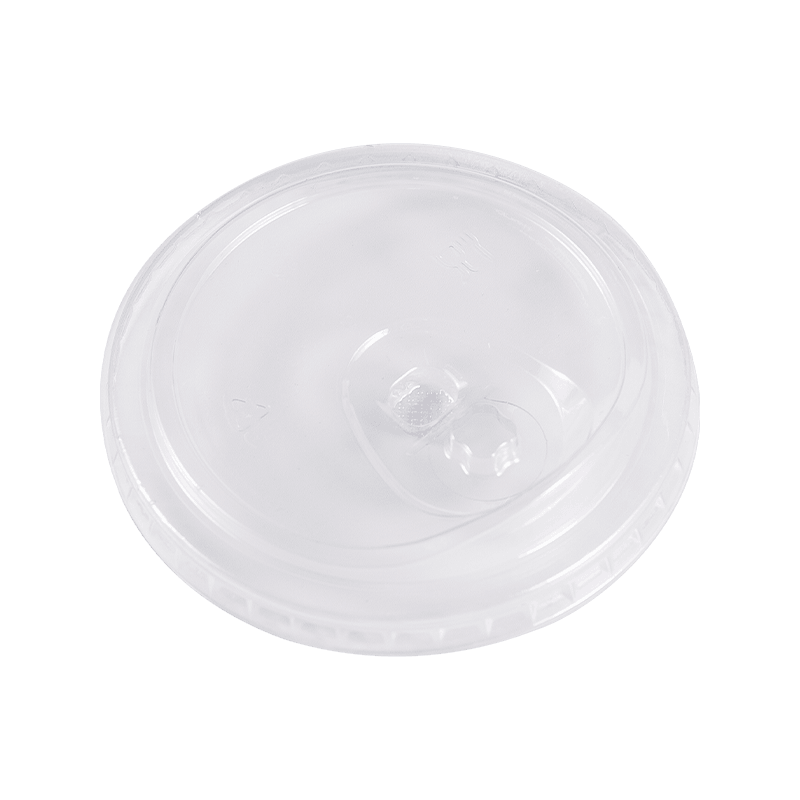
Plastic cup lids are formed to fit securely over disposable cups, providing spill protection, temperature retention, and in many designs, a drinking or straw opening. The right lid depends heavily on the beverage — hot drinks need heat-resistant materials and often a sipping opening designed for hot liquid, while cold drinks prioritize a secure fit and straw compatibility.
Disposable Cup Lids: Common Types
Flat Lids
A simple flat cap with a small sip or straw opening, common on cold cups and iced beverage service.
Dome Lids
Raised center to accommodate whipped cream, ice, or overfilled drinks without spilling on contact.
Sip-Through Lids
Designed for hot beverages, with a molded sipping spout that lets the drink be consumed without full lid removal.
Straw-Slot Lids
Pre-cut or press-through X-slots designed specifically for straw insertion on cold beverage cups.
Plastic Cup Lid Materials
| Material | Key Characteristics | Common Use |
|---|---|---|
| PP (Polypropylene) | Heat-resistant, flexible, good impact resistance | Hot beverage lids, general-purpose disposable lids |
| PET (Polyethylene Terephthalate) | Clear, rigid, good barrier properties | Cold beverage lids, dome lids requiring clarity |
| PS (Polystyrene) | Rigid but more brittle, lower cost | Basic flat lids for cold drink applications |
| PLA (Bio-based plastic) | Compostable under industrial conditions, similar clarity to PET | Eco-conscious cold beverage lids |
PP Plastic Cup Lids
Polypropylene is the standard material for hot beverage lids because it retains structural integrity and doesn't warp or leach flavor at typical hot drink serving temperatures, generally holding up well up to around 100°C. PP is also more flexible and impact-resistant than PS, which makes it a common choice for both hot and general-purpose lids where durability during handling and transport matters as much as heat resistance.
PET Cup Lids
PET's clarity and rigidity make it the preferred material for dome and flat lids on cold beverages, where visual appeal — showing off layered drinks, ice, or toppings — is part of the product presentation. PET doesn't perform well at high heat, so it's rarely specified for hot beverage lids, but its strong barrier properties and recyclability (PET is one of the more widely accepted plastics in curbside recycling programs) make it a solid choice for cold drink applications where recyclability matters to the buyer.
Eco Friendly and Sustainable Cup Lids
"Eco-friendly" on a cup lid can mean several different things — recyclable, biodegradable, compostable, or made from bio-based rather than petroleum-based plastic — and these terms aren't interchangeable. A genuinely sustainable lid program typically considers the full picture: material sourcing, actual end-of-life processing available to the customer base, and whether the claimed environmental benefit depends on industrial composting infrastructure that may not be locally available. Buyers evaluating sustainable lid options should ask suppliers for the specific certification or standard behind any environmental claim rather than relying on general marketing language.
Biodegradable Cup Lids
Biodegradable lids are typically made from PLA or other bio-based polymers engineered to break down under specific environmental conditions, most often requiring industrial composting facilities rather than breaking down in a standard landfill or home compost setting. The distinction between "biodegradable" and "compostable" matters: compostable claims are generally backed by recognized standards specifying breakdown timeframes and conditions, while "biodegradable" alone is a less regulated term that doesn't guarantee the same verified performance.
Recyclable Plastic Cup Lids
Recyclability depends on both the plastic type and local recycling infrastructure — PET and PP are more widely accepted in curbside recycling programs than PS, but actual recyclability still varies by region and facility capability. Lid color, additives, and any printing or coating can also affect whether a lid is accepted by a given recycling stream, which is why suppliers of recyclable lids typically specify the exact resin type and any relevant recycling code to help buyers confirm compatibility with their target market's recycling programs.
Custom Disposable Cup Lids
Custom lids are typically specified by fit (matching a specific cup rim diameter and profile), opening style (sip, straw slot, or dome), material, and any branding requirements such as embossing, printing, or color matching. Because lid-to-cup fit tolerances are tight — a loose lid leaks, an overly tight one is difficult to apply — custom lid orders generally require testing against the actual cup being used in production rather than relying on standard diameter specifications alone.
Injection Molded Cup Lids
Injection molding is the standard manufacturing process for plastic cup lids, where molten plastic resin is injected into a precision steel mold under pressure and cooled into the finished lid shape. This process allows consistent wall thickness, precise fit tolerances, and the ability to mold complex features — straw slots, sip spouts, locking rims — directly into the lid in a single production step, which is why mold quality has a direct impact on how consistently a lid seals and fits across a full production run.
Food Grade Plastic Cup Lids
Food grade certification confirms the lid material meets recognized food contact safety standards, ensuring no harmful substances transfer into the beverage during normal use, including at elevated temperatures for hot drink lids. This certification should be confirmed with documentation from the manufacturer rather than assumed from the material type alone, since food-contact compliance depends on the specific resin formulation and any additives used in production, not just the base plastic category.
Leak Proof Cup Lids
Leak resistance comes down to two design factors working together: a precise fit between the lid's inner rim and the cup's outer rim, and a locking or friction-fit mechanism strong enough to stay sealed through normal handling, transport, and temperature changes. Dome and flat lids designed for cold beverages generally need tighter seal tolerances than hot beverage sip lids, since cold drinks are more likely to be transported over longer distances or handled roughly (rideshare delivery, drive-through service) where leak resistance matters most.

 +86-0563-8029081
 +86-0563-8029081
 No. 12 Sanxi Road, Xinqiao Development Zone, Jingde Country, Xuancheng City, Anhui Province.