
 English
 Español
 عربى
عربىContent
Why Paper Cups Have Handles — and When They Matter
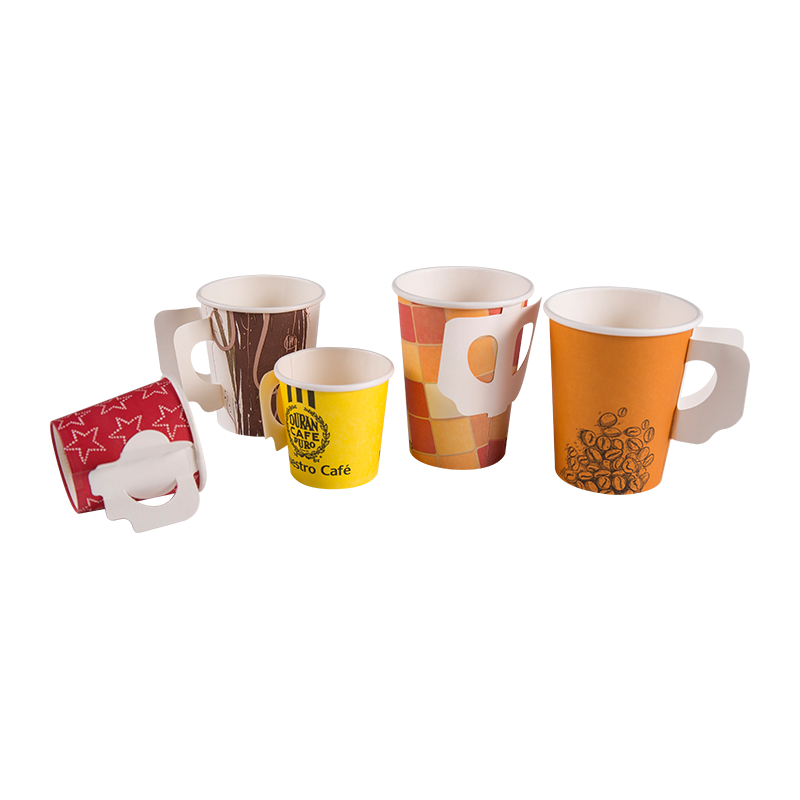
Handles on paper cups solve a specific and practical problem: hot beverages transfer heat through thin paper walls faster than most people expect. A standard single-wall paper cup filled with coffee at 85 degrees C becomes uncomfortable to hold within seconds. Handles eliminate that contact point entirely, allowing the cup to be held securely without touching the outer wall.
This makes paper cups with handles the preferred format in sit-down café service, office catering, and any setting where drinks are served at serving temperature rather than handed off to be walked with. They also reduce the need for corrugated sleeves or double-walling, which lowers material cost per unit in food service operations that prioritize table presentation over portability.
The handle itself is typically die-cut from the same paperboard stock as the cup body and bonded with food-grade adhesive. On better-constructed versions, the handle attachment points are reinforced to prevent the most common failure mode: the handle pulling away from the cup wall when a full cup is lifted.
Paper Coffee Cups with Handles: Construction and Hot-Hold Performance
Paper coffee cups with handles are built around the same core engineering as standard hot drink cups — a PE (polyethylene) lining on the interior that creates a moisture barrier between the liquid and the paper substrate. Without this lining, hot liquid would begin saturating and softening the paperboard within minutes, compromising both structural integrity and leak resistance.
The handle format introduces additional structural requirements. Because the cup needs to support its full loaded weight from two bonded contact points rather than from a hand wrapped around the body, the paperboard grade used in handled cups is generally heavier than in equivalent non-handled cups. Common weights run from 230 to 300 gsm for the cup body, with thicker stock used for larger volume formats (12 oz and above).
| Cup Type | Typical Wall Construction | Handle Included | Best Use |
|---|---|---|---|
| Single-wall paper cup | 1 layer PE-lined paperboard | No | Cold drinks, short-hold hot drinks with sleeve |
| Double-wall paper cup | 2 layers with air gap insulation | No | Hot drinks, takeaway coffee |
| Paper cup with handle | Single or double wall, heavier stock | Yes | Sit-down service, catering, hot beverage presentation |
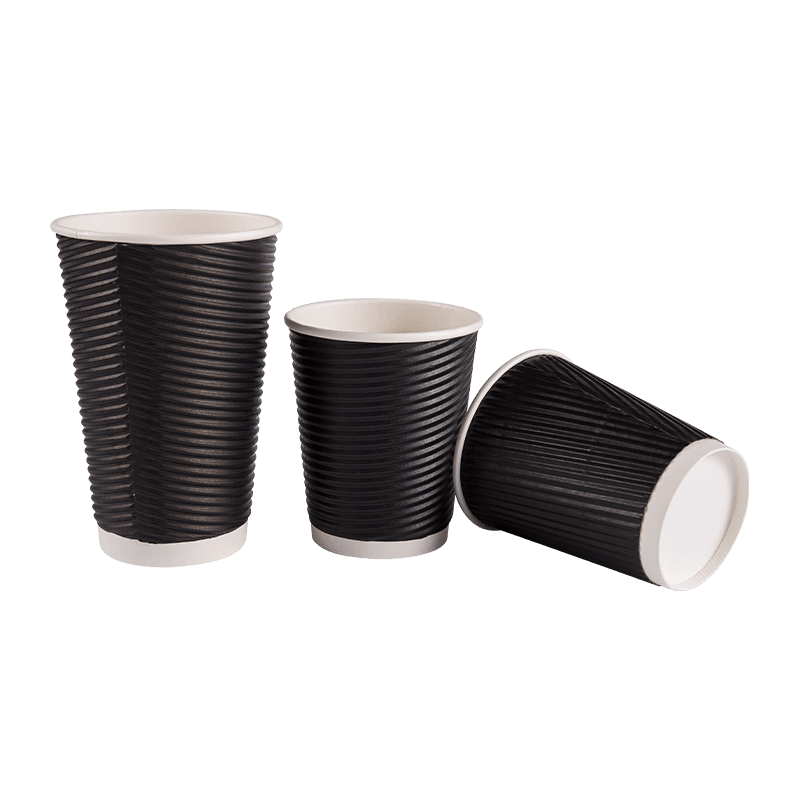
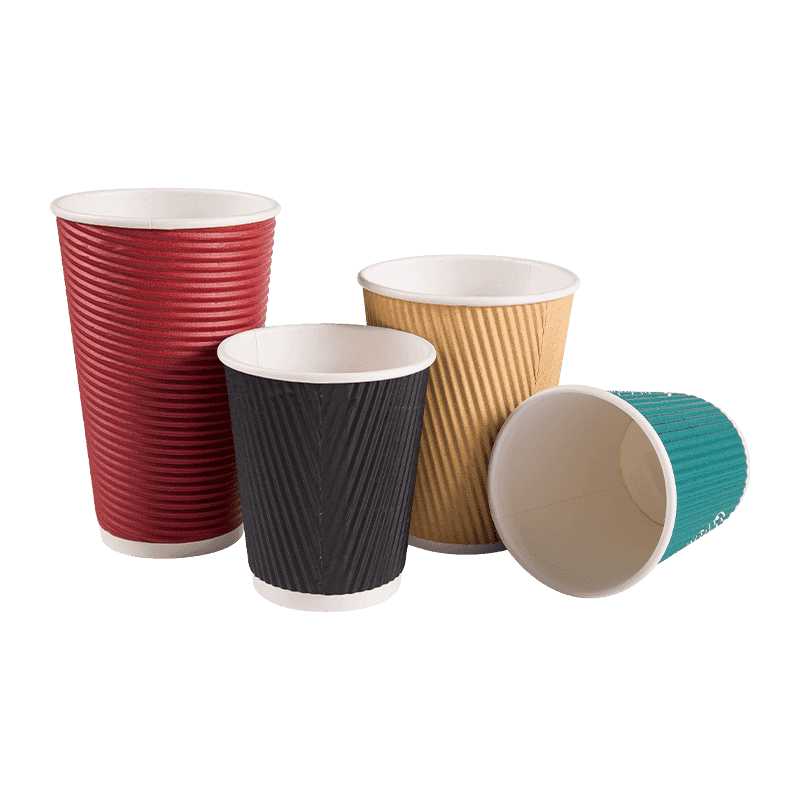
| Ripple-wall paper cup | Textured outer layer for grip | No | Takeaway hot drinks without sleeve |
Comparison of common paper cup wall constructions and typical applications
For café and catering applications, cups with handles in the 8 oz to 12 oz range cover the majority of hot beverage service. Larger 16 oz formats are less common in handled paper cups because the weight of a full cup puts meaningful stress on the handle bond points — at this volume, ceramic mugs or handled paper cups with reinforced attachment are preferable.
Can You Put Paper Cups in the Microwave
The short answer is: most paper cups are not designed or recommended for microwave use, and doing so carries real risks that are worth understanding before assuming it is safe.
The primary issue is the PE lining. Polyethylene is stable at the temperatures paper cups encounter during normal beverage service (up to around 90 degrees C), but microwave heating behaves differently from hot-fill. Microwaves heat liquid unevenly and can create localized hot spots that significantly exceed the surface temperature of the drink. At sustained high temperatures, the PE lining can begin to soften and, in some cases, allow small amounts of the coating to migrate into the liquid.
Key safety point: Even cups labeled microwave-safe have typically been tested for reheating durations of 30 to 60 seconds at standard power. Extended microwave heating — several minutes at high power — is outside the tested range for most disposable paper cups, including those marketed as microwave-compatible.
A secondary concern applies specifically to paper cups with handles: the adhesive used to bond the handle to the cup body is not always rated for microwave exposure. In some constructions, microwave heating can weaken the bond, creating a risk of the handle detaching when the cup is lifted while full of hot liquid.
The practical guidance is straightforward:
- For reheating drinks for 30 seconds or less, a microwave-labeled paper cup is generally acceptable
- For heating from cold or for longer durations, transfer to a ceramic or glass vessel
- Paper cups with handles should not be microwaved unless the manufacturer explicitly confirms both the cup body and handle adhesive are microwave-rated
- Any cup showing signs of softening, leaking, or deformation during microwave use should be removed immediately and not reused
Material Composition and Environmental Considerations
Standard paper cups — with or without handles — are not straightforwardly recyclable in most municipal systems despite being made primarily from paper. The PE lining that makes them functional as liquid containers is the same feature that complicates end-of-life processing: the plastic coating must be separated from the paper fiber before either material can be recovered, and most standard paper recycling facilities are not equipped to do this.
This has driven meaningful development in alternative lining materials over the past several years. The main alternatives now in commercial production include:
- PLA (polylactic acid) lining — plant-derived plastic that is compostable under industrial composting conditions, though not in home compost bins
- Aqueous dispersion coatings — water-based barrier coatings that achieve the same moisture resistance as PE without a separate plastic layer, improving recyclability
- Double-wall construction without lining — relies on the air gap between walls for insulation, removing the lining requirement entirely for some use cases
For procurement decisions at scale, the distinction between compostable and recyclable matters operationally. PLA-lined cups require access to industrial composting infrastructure to achieve their environmental benefit — sent to landfill, they perform similarly to PE-lined cups. Aqueous-coated cups are more broadly recyclable but remain a newer format with variable acceptance across different recycling streams.
Selecting the Right Handled Paper Cup for Your Application
For food service operators and buyers evaluating paper cups with handles, the relevant specification points go beyond size and volume. The factors that most affect in-service performance and procurement value are:
- Paperboard weight — heavier stock (270 gsm and above) provides better hot-hold rigidity and reduces the risk of wall deformation during service
- Handle bond strength — look for manufacturer data on pull-force ratings at operating temperature; a handle that holds under static load may still fail if the cup is lifted abruptly
- Lining type and certifications — food contact compliance (FDA, EU 10/2011, or equivalent) should be documented; for compostable claims, look for EN 13432 or ASTM D6400 certification
- Print compatibility — if branding is required, confirm the cup surface is compatible with the intended print method (flexographic, offset, digital) before ordering in volume
- Lid compatibility — handled paper cups do not always accept standard sip lids designed for rimless takeaway cups; confirm lid fitment against your specific cup rim diameter

 +86-0563-8029081
 +86-0563-8029081
 No. 12 Sanxi Road, Xinqiao Development Zone, Jingde Country, Xuancheng City, Anhui Province.