
 English
 Español
 عربى
عربىThe shift away from fluorinated chemistry is a regulatory necessity. A 2017 study by Schaider and colleagues screened nearly 400 U.S. fast food packaging samples and found fluorinated chemicals in a substantial share of greaseproof papers. EU member states have since restricted PFAS in food contact paper, and major fast food chains now require fluorine-free declarations from packaging suppliers.
Content
- 1 Why Grease Penetrates Kraft Board Before the Food Cools
- 2 Fluorine-Free Greaseproof Coatings: How They Block Oil Without PFAS
- 3 Kit Ratings, Cobb Values, and Oil Hold-Out: Data That Predicts Field Performance
- 4 Recyclability and Compostability: The Coating Decides the End of Life
- 5 Procurement Checklist: Verifying a Fluorine-Free Greaseproof Box Before You Buy
- 6 Frequently Asked Questions About Fluorine-Free Greaseproof Coatings
Why Grease Penetrates Kraft Board Before the Food Cools
Grease penetrates kraft board by capillary wicking between cellulose fibers, and the rate accelerates as oil temperature rises.
Kraft board is a porous network of 20-40 micron cellulose fibers. Cooking oil at serving temperature is thin: roughly eight times less viscous at 90°C than at 25°C. In a hot-oil hold-out test, a 300 gsm uncoated sheet shows visible wet-through in under two minutes at 90°C. Supercalendering densifies the fiber matrix and lifts the barrier to Kit 5-7, but hot oil still finds pinholes, fiber ends, and fold lines.
That is why specifiers request Kit ratings and oil hold-out times instead of relying on base paper weight. A heavier box only absorbs more oil before the stain appears; it does not stop penetration. As the takeaway trend pushes hotter, greasier meals into paper containers, the barrier layer has become the real product decision.
Fluorine-Free Greaseproof Coatings: How They Block Oil Without PFAS
Fluorine-free greaseproof coatings form a continuous film on the board surface that blocks oil wetting, replacing the fluorinated polymer chemistry that dominated greaseproof paper for decades.
Three families dominate the market: water-based dispersion coatings, PLA extrusion coatings, and mechanically densified paper. Legacy PFAS formulations reached Kit 12 by lowering the fiber surface energy; fluorine-free dispersion coatings close the capillaries with film formers such as starch derivatives, cellulose ethers, acrylic copolymers, and mineral platelet blends. Typical dry coat weights are 8-15 gsm, and the films reach Kit 8-10.
| Coating type | Mechanism | Typical Kit | End of life |
| PE extrusion | Molten polyethylene film sealed to paper | 12 | Hard to recycle, not compostable |
| PLA extrusion | Compostable polyester film | 10-12 | Industrial compost only |
| Water-based dispersion | Biopolymer or acrylic film from liquid coating | 8-10 | Repulpable and recyclable |
| Densified kraft | Calendered dense fiber matrix | 5-7 | Recyclable, low heat tolerance |
For a closer look at how greaseproof barriers behave on different tray geometries, see our technical overview of oilproof packaging for cardboard food trays.
A manufacturer that controls both coating formulation and conversion, such as Xuancheng Bo Site Commodity Co., Ltd. (papercup-factory.com), can tune the coating to the food matrix: higher dry solids for fried chicken, lower coat weight for bakery.
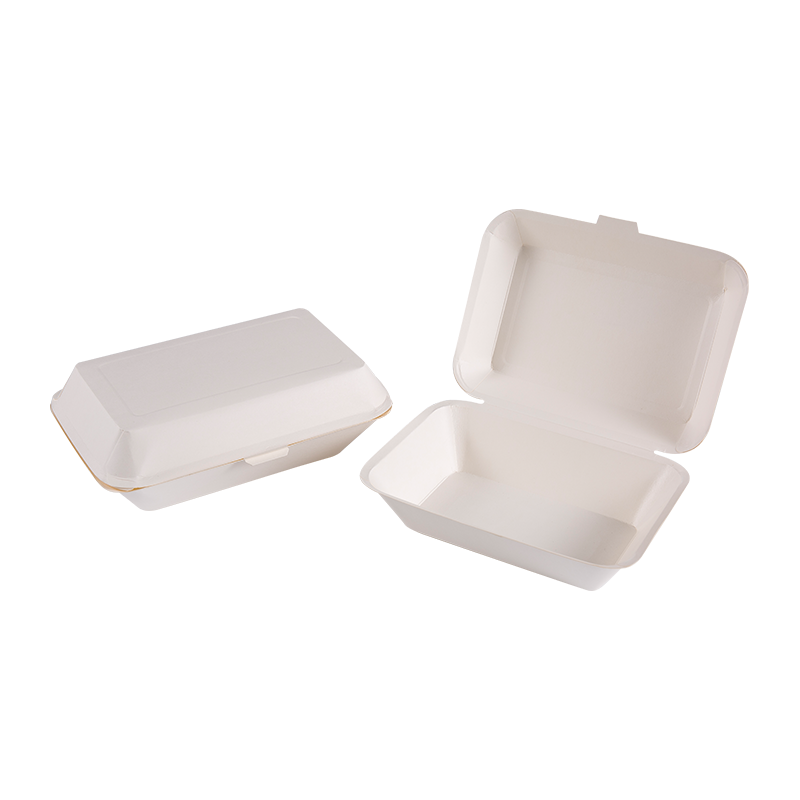 Biodegradable Oil-proof Lunch Boxes for Greasy Takeaway MealsPlant-fiber molded lunch boxes with an oil-resistant barrier are designed for fried chicken, burgers, and hot stir-fries, keeping food leak-proof during delivery. Their stackable, single-use format suits fast-paced food service operations.View Product →
Kit Ratings, Cobb Values, and Oil Hold-Out: Data That Predicts Field Performance
The Kit test (TAPPI T-559 / ISO 16532-2) is the decisive grease-resistance specification for fast food boxboard: require Kit 8 minimum for burgers and fries, and Kit 10 for crispy fried chicken.
The Kit method applies 12 numbered solutions with increasing ratios of castor oil, n-heptane, and toluene; ratings run from 1 (weakest) to 12 (strongest). The test is fast and reproducible but does not simulate heat or time. Pair it with an oil hold-out test at 60-100°C for 15-30 minutes and a Cobb water absorption check (TAPPI T-441) for wet foods.
Typical Kit grease-resistance ratings by coating type on 280-350 gsm kraft board
Kit ratings per TAPPI T-559; higher means stronger resistance to aggressive oil mixtures.| Application | Minimum Kit | Oil temperature | Hold-out target |
| Burgers and fries | Kit 8 | 60°C | 15 minutes |
| Crispy fried chicken | Kit 10 | 90°C | 30 minutes |
| Fish and chips | Kit 10 | 80°C | 20 minutes |
| Muffins and pastries | Kit 6 | 25°C | 60 minutes |
Recyclability and Compostability: The Coating Decides the End of Life
Water-based fluorine-free dispersion coatings keep a kraft box repulpable and recyclable in standard paper streams; PLA and PE coatings force the box into separate disposal routes.
A greaseproof box that cannot be recycled defeats the purpose of switching from plastic. Dispersion coatings at 8-15 gsm repulp per PTS-RH:021 and enter existing cartonboard recycling. PLA extrusion requires industrial composting at 58°C and contaminates paper recycling in the wrong bin. PE-coated boxes are neither compostable nor accepted by most municipal programs.
- Kit 8-10 grease resistance
- Repulpable per PTS-RH:021
- Fits existing cartonboard sorting
- Kit 10-12 grease resistance
- Needs industrial compost at 58°C
- Contaminates paper recycling if mixed
Burger boxes are a high-volume stream that ends up in recycling only if the coating allows it. Municipal programs are beginning to test recovered paper for PFAS, so fluorine-free and repulpable formulations are the only safe long-term specification.
 Food-Grade Kraft Paper Burger Boxes with Reinforced BottomVirgin kraft paper burger boxes feature a reinforced base to prevent leaks and maintain burger integrity. They are biodegradable and food-contact compliant, making them a practical choice for high-volume fast food packaging needs.View Product →
Procurement Checklist: Verifying a Fluorine-Free Greaseproof Box Before You Buy
Before ordering, verify four things: a Kit test certificate, a fluorine-free declaration backed by chemical analysis, food-contact documentation, and a field trial with your own hot menu.
Ask each candidate supplier for these six deliverables in writing, and make the test data part of the purchase contract.
- Coating TDS: identify the base chemistry, such as starch, cellulose, acrylic, or mineral platelet blend.
- Lab test report: Kit rating per TAPPI T-559 and Cobb value per TAPPI T-441 issued within the last 12 months.
- Fluorine declaration: total fluorine below 10 ppm by ion chromatography or a comparable screening method.
- Food-contact compliance: documentation for hot, greasy food under EU 10/2011 and FDA 21 CFR 176.170.
- Field trial: 30 minutes with your hottest item, including 10 minutes inside a standard delivery bag.
- Converting check: crease, fold, and heat-seal performance on your existing packaging line.
The same logic applies to smaller formats. Greaseproof boat trays for fried chicken and fries are coated on the same water-based lines, and their Kit rating should match the main box.
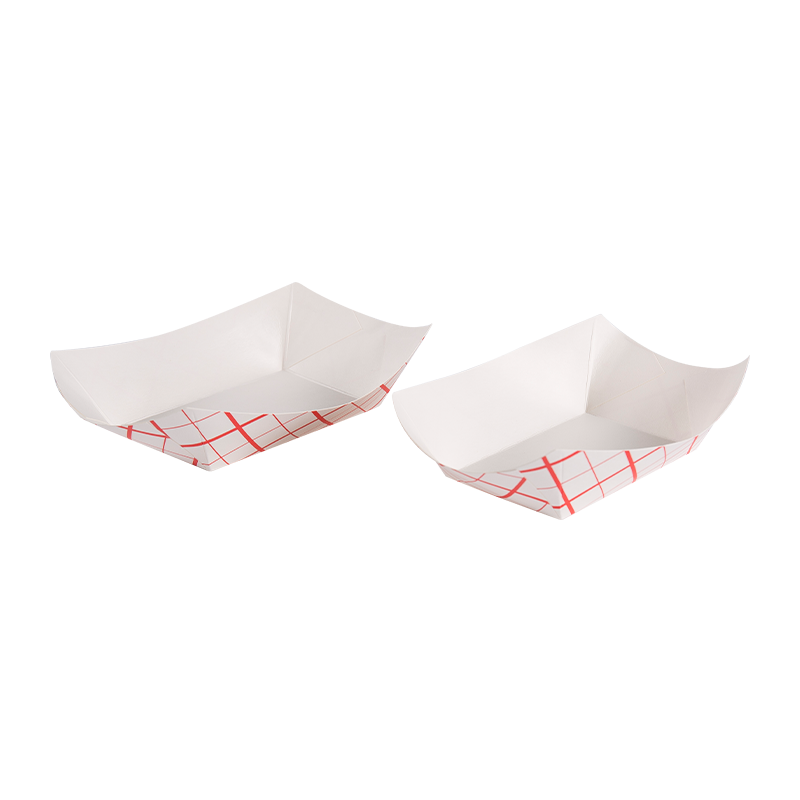 Red Lattice Oil-proof Kraft Paper Boat-shaped Food TrayA grease-resistant kraft paper boat tray with a distinctive red lattice design holds burgers, fries, and chicken nuggets securely. Its biodegradable construction and stable shape suit both delivery and in-store dining.View Product →
Frequently Asked Questions About Fluorine-Free Greaseproof Coatings
What Kit rating does a fast food kraft box need for fried food?
Burgers, fries, and nuggets require Kit 8 minimum. Crispy fried chicken and fish and chips, which are hotter and oilier, need Kit 10. Ask for the certificate for the exact board and coating combination.
Are fluorine-free greaseproof coatings safe for direct food contact?
Yes. Water-based dispersion coatings are formulated from food-contact-approved raw materials and can comply with EU Framework Regulation 1935/2004, EU 10/2011, and FDA 21 CFR 176.170. The supplier must provide a declaration of compliance for the coating used.
Do fluorine-free coated boxes cost more than PFAS-coated boxes?
Fluorine-free dispersion coatings add roughly 5-15% compared with legacy fluorinated formulations, but the gap has narrowed with volume. With PFAS bans expanding, relying on fluorinated chemistry is the more expensive long-term risk.
Can water-based coated kraft boxes go in the microwave?
Only if the supplier certifies microwave compatibility. Some dispersion coatings soften or delaminate above 110°C, while heat-stable formulations handle reheating up to 160°C. Verify with the product test report before approval.

 +86-0563-8029081
 +86-0563-8029081
 No. 12 Sanxi Road, Xinqiao Development Zone, Jingde Country, Xuancheng City, Anhui Province.