
 English
 Español
 عربى
عربىContent
Can You Put a Paper Cup in the Microwave?
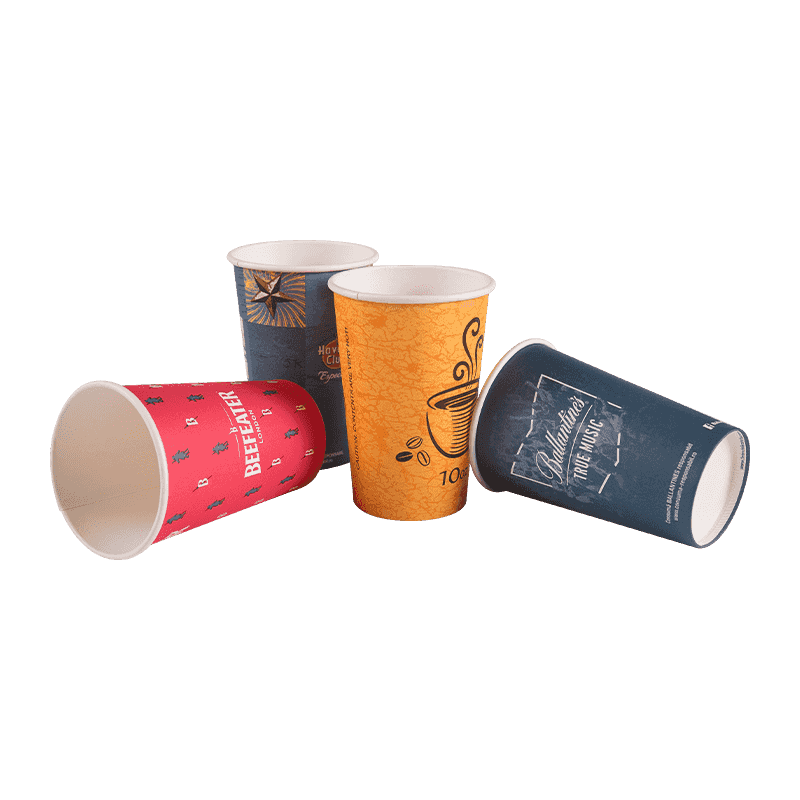
The short answer is: it depends on the cup. Most standard paper cups are not recommended for microwave use—not because the paper itself is the problem, but because of what's coating it. The majority of disposable paper cups are lined with a thin layer of polyethylene (PE) plastic or, in some older products, polycoat adhesives that hold the cup together and make it liquid-resistant. When exposed to microwave energy and the heat of the liquid inside, that lining can begin to soften, warp, or partially break down—compromising the cup's structural integrity and potentially releasing compounds into your drink.
The safest rule: unless the cup is explicitly labeled "microwave-safe" by the manufacturer, don't microwave it. That label means the product has been tested to withstand microwave temperatures without deforming or leaching at levels considered harmful. An unlabeled paper cup has not been tested for that purpose, regardless of how it looks or feels.
Why the Lining Is the Real Issue
Paper on its own is relatively microwave-inert—it absorbs very little microwave energy and doesn't heat significantly unless it's dry and in prolonged contact with a heat source. The structural risk in microwaving a paper cup comes from its inner coating and adhesive layers, which are what make the cup functional as a liquid container in the first place.
- Polyethylene (PE) lining: The most common coating in modern paper cups. PE has a melting point of approximately 120–130°C (248–266°F). Water in a microwave can reach close to boiling (100°C/212°F) and superheating can push it slightly beyond that. While PE may not fully melt, it can soften at these temperatures—and the mechanical pressure of liquid combined with softened adhesive can cause the cup's seam to fail, resulting in a leaking or collapsing cup mid-microwave.
- Wax coating: Older or budget paper cups may use a wax coating instead of PE. Wax melts at much lower temperatures—around 60–70°C (140–158°F)—well within the range of a hot drink. Wax-coated cups should never be microwaved; the coating melts into the liquid visibly and the cup loses structural integrity quickly.
- Glued seams: Even if the lining holds, the adhesive bonding the cup's side seam and bottom disk can fail under combined heat and liquid pressure, causing leaks or sudden cup failure.
Beyond structural risk, there is an ongoing scientific conversation about whether PE linings release microplastics or chemical migrants into hot liquids. A 2020 study published in the Journal of Hazardous Materials found that hot liquid left in a paper cup for 15 minutes caused measurable release of microplastic particles from the PE lining. The health implications of microplastic ingestion at these levels are still being studied, but the finding has strengthened recommendations to avoid prolonged contact between hot liquids and PE-lined containers.
Are Paper Cups Safe for Hot Drinks?
For their intended purpose—holding a hot drink for the time it takes to drink it—most paper cups are considered safe by regulatory standards in the U.S., EU, and other major markets. The FDA evaluates food contact materials including paper cup linings, and PE linings used in hot drink cups are approved for that use at typical serving temperatures. The key phrase is "intended use": a paper cup designed for a takeaway coffee is intended to hold a hot liquid for 15–30 minutes, not to be reheated, refilled repeatedly, or left with hot liquid for extended periods.
Risk increases when cups are used outside their intended conditions:
- Prolonged contact with very hot liquid: Freshly brewed coffee or tea served at 85–95°C (185–203°F) for extended periods accelerates any chemical migration from the lining compared to a drink consumed promptly.
- Reheating in a microwave: This takes the cup outside its design parameters—it was not engineered for the uneven, penetrating heat of microwave energy applied from the outside while liquid heats from within.
- Acidic beverages: Hot acidic drinks (citrus-based teas, hot lemonade, tomato-based soups) can accelerate degradation of cup linings more than neutral beverages.
Microwave-Safe Paper Cups: What Makes Them Different
Microwave-safe paper cups exist and are genuinely engineered for that use case. They differ from standard paper cups in several ways:
- Higher-temperature resistant coatings: Some use PLA (polylactic acid) linings or other heat-stable coatings with higher softening points than standard PE, maintaining integrity at microwave temperatures.
- Reinforced seams: The side seam and bottom construction are designed to withstand the thermal and mechanical stress of microwave heating without leaking.
- No metallic components: Some specialty paper cups include metallic insulating layers or foil elements—these are explicitly incompatible with microwave use and will arc. Microwave-safe cups contain no metal whatsoever.
- Third-party testing and labeling: The microwave-safe designation requires testing under standardized conditions. Look for the explicit label; a generic "suitable for hot drinks" statement does not imply microwave safety.
Eco-Friendly and PLA-Lined Cups: Are They Safer?
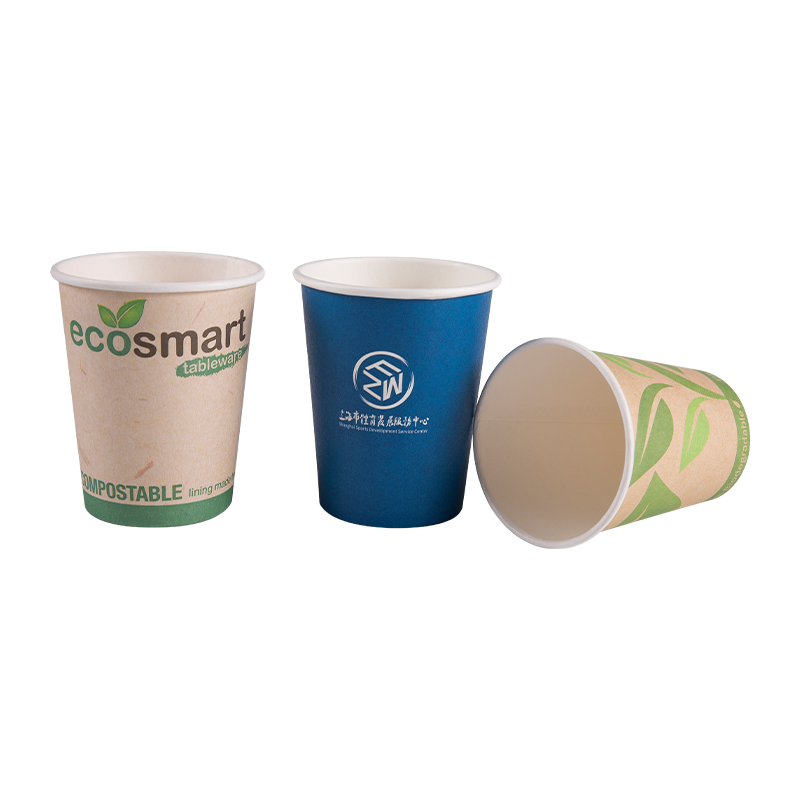
PLA (polylactic acid) is a plant-derived bioplastic increasingly used as a lining in cups marketed as compostable or eco-friendly. PLA performs well at typical hot drink temperatures but has a notably lower heat distortion point than PE—around 55–60°C (131–140°F) in standard formulations. This makes PLA-lined cups less suitable for very hot drinks than PE-lined equivalents, and significantly less suitable for microwave use. PLA cups can visibly deform when filled with boiling water and are not designed to be microwaved.
Heat-resistant PLA formulations exist but are significantly more expensive and less common in standard disposable cup products. If a cup is labeled compostable but not labeled microwave-safe, assume the PLA lining is a standard-grade formulation and treat it accordingly.
Practical Guidelines: What to Use Instead
If you need to heat a liquid in a paper cup, the safest approach is to transfer it to a microwave-safe container first—a ceramic mug, a glass, or a container explicitly labeled microwave-safe. This takes an extra 10 seconds and eliminates all the risks associated with heating a cup that wasn't designed for it.
| Cup Type | Safe for Hot Drinks | Safe to Microwave | Notes |
|---|---|---|---|
| Standard PE-lined paper cup | Yes (intended use) | No | Seam failure risk; potential microplastic release when reheated |
| Wax-coated paper cup | No (wax melts) | No | Coating melts into liquid; cup collapses |
| PLA-lined compostable cup | Partially (below ~60°C) | No | Deforms at boiling temperatures; not microwave-rated |
| Labeled microwave-safe paper cup | Yes | Yes | Follow time/power limits stated on packaging |
| Ceramic mug / glass | Yes | Yes (if labeled) | Best option for reheating any hot beverage |
For environments where paper cups are the only option—office kitchens, events, travel—keeping a small stack of labeled microwave-safe paper cups is a practical solution. They cost marginally more than standard cups but eliminate the guesswork entirely and are available from most commercial foodservice suppliers in single-wall and double-wall (insulated) configurations.

 +86-0563-8029081
 +86-0563-8029081
 No. 12 Sanxi Road, Xinqiao Development Zone, Jingde Country, Xuancheng City, Anhui Province.