
 English
 Español
 عربى
عربىContent
When Were Paper Cups Invented? The Full History
The paper cup is one of those inventions so embedded in daily life that its origin rarely gets questioned. The answer is more specific — and more fascinating — than most people expect. Paper cups were invented in the early 1900s, with the pivotal moment arriving in 1907 when Lawrence Luellen, a Boston lawyer, developed a disposable cone-shaped paper cup he called the "Health Kup." His motivation was public health, not convenience: shared tin or glass cups chained to public water stations were being identified as a primary vector for the spread of tuberculosis and other infectious diseases.
Luellen partnered with Hugh Moore to commercialize the invention, founding what would eventually become the Dixie Cup Company — a name that became synonymous with the product for most of the 20th century. The flat-bottomed paper cup, easier to stack and store than the cone design, followed in 1912. By 1916, the Public Cup Vendor Company (later renamed the Individual Drinking Cup Company) was mass-producing paper cups for schools, railroads, and offices across the United States.
The Public Health Catalyst
The paper cup's adoption was not driven purely by market forces — it was accelerated by legislation. Between 1908 and 1912, Kansas, New York, and several other U.S. states passed laws banning shared drinking vessels in public spaces. Railroad companies, facing both regulation and passenger complaints, became among the earliest large-scale commercial customers. The paper cup solved a genuine sanitation crisis at the precise moment public awareness of germ theory was reaching mainstream consciousness.
From Wax to Polyethylene: The Technical Evolution
Early paper cups were coated with wax to prevent the paper from absorbing liquid and collapsing. Wax-coated cups remained the standard through most of the mid-20th century. The transition to polyethylene (PE) coating — a thin plastic film heat-bonded to the interior surface — began in the 1950s and was largely complete by the 1970s. PE coating is thinner, more consistent, and bonds more reliably than wax, enabling faster machine speeds and better liquid barrier performance. It is the standard used in virtually all modern hot and cold beverage cups today.
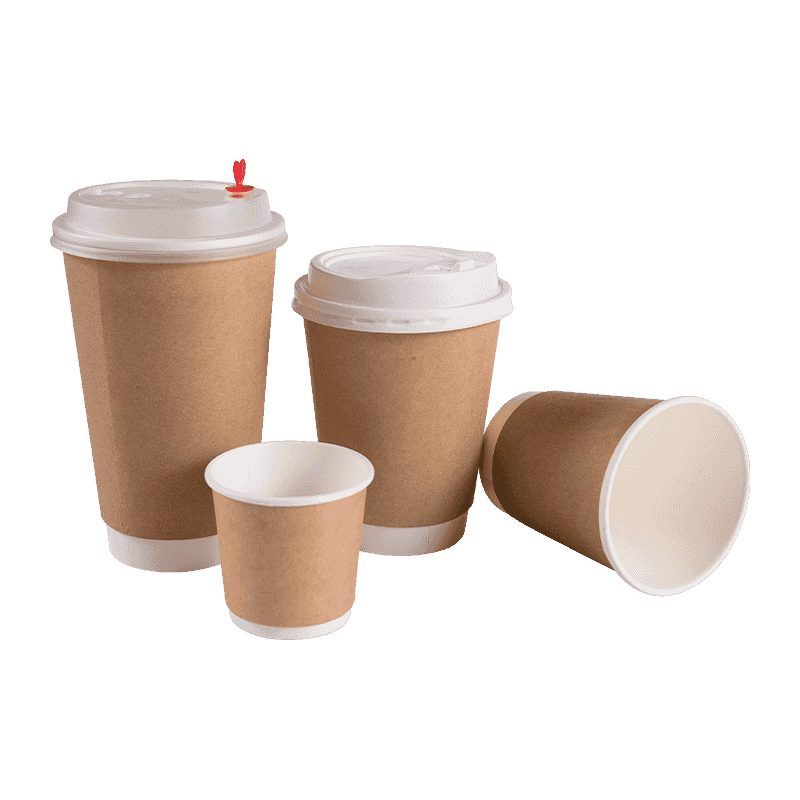
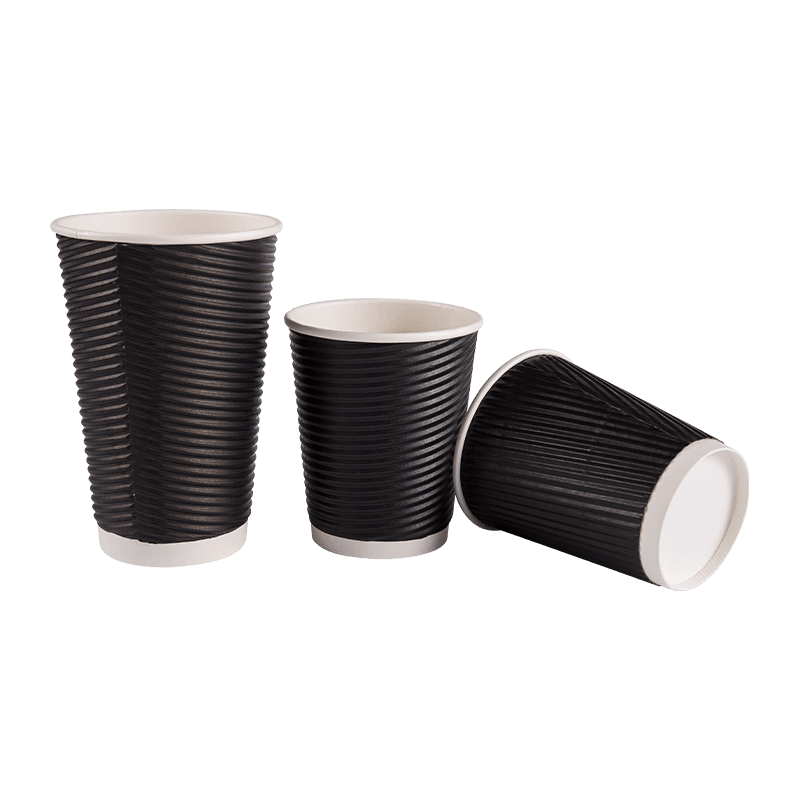
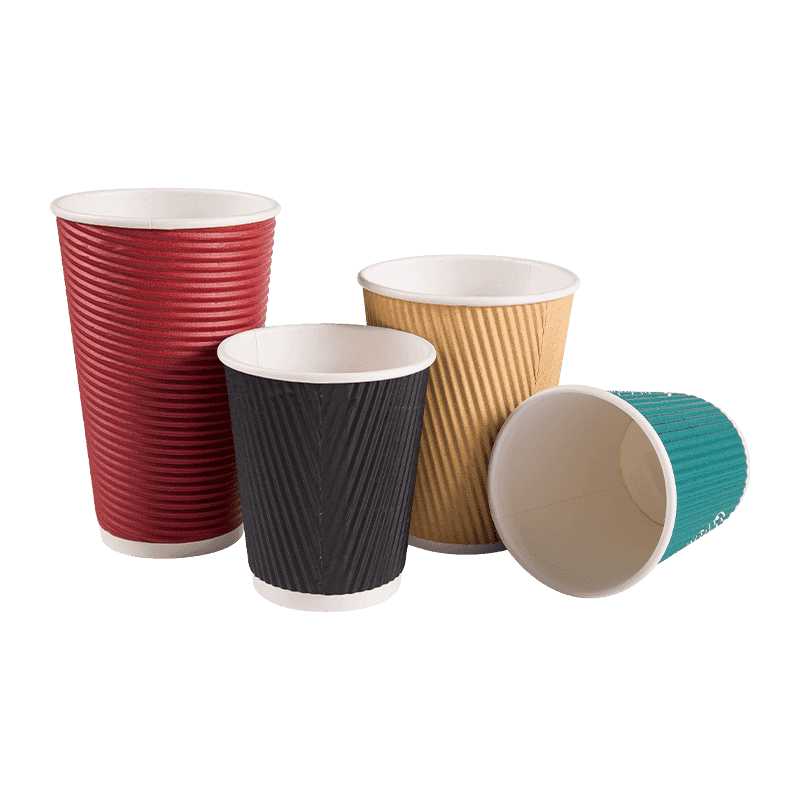
The double-wall cup — two paper layers with a fluted or air-gap insulating layer between them — was commercialized in the 1990s, eliminating the need for cardboard sleeves on hot beverages. More recently, plant-based PLA (polylactic acid) coatings have been introduced as a compostable alternative to PE, though industrial composting infrastructure remains a limiting factor for their end-of-life claims.
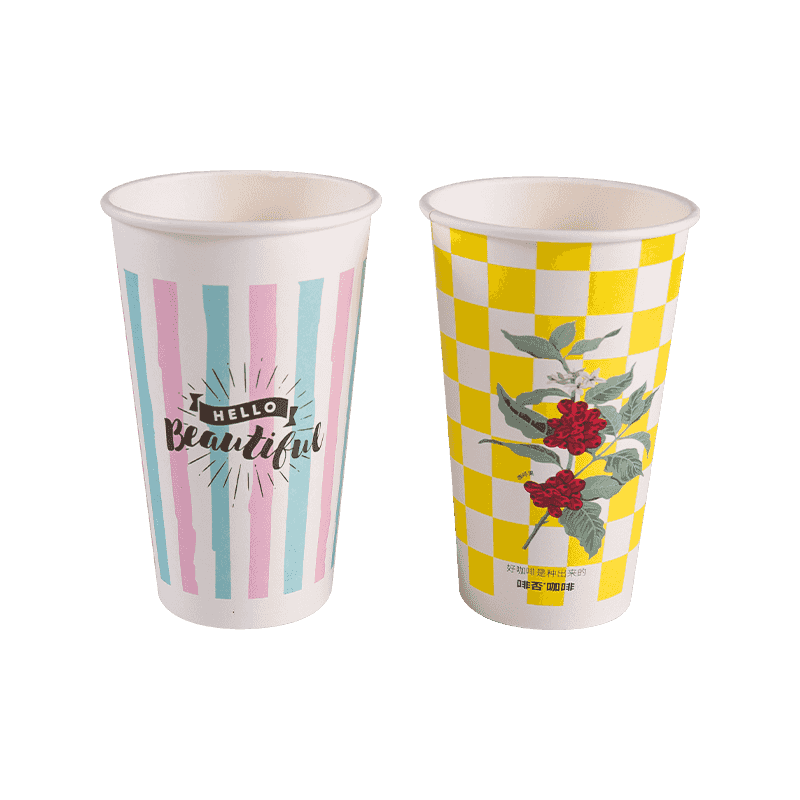
Retro Paper Cups: Why Mid-Century Design Keeps Coming Back
Retro paper cups — particularly those drawing on the graphic design vocabulary of the 1950s through 1980s — have experienced a sustained commercial revival across foodservice, events, and retail packaging. The appeal operates on multiple levels simultaneously: nostalgia, irony, and a genuine design quality that contemporary minimalism often lacks.
The Visual Language of Vintage Cup Design
The most iconic retro paper cup aesthetic belongs to the Anthora — the blue-and-white Greek key pattern cup created in 1963 by designer Leslie Buck for the Sherri Cup Company. Originally produced for New York City diners and Greek-owned coffee shops, the Anthora became so ubiquitous in the city that it achieved cultural landmark status. At its peak production, an estimated 500 million Anthora cups were manufactured annually. Its design — classical columns, the phrase "We Are Happy to Serve You," and warm earth-tone lettering — captures everything that defines the retro paper cup aesthetic: bold illustration, confident typography, and zero minimalist restraint.
Other defining visual motifs of retro cup design include: sunburst and starburst patterns popular through the 1950s and 60s; geometric color-blocking in high-contrast primaries; hand-lettered script typefaces; and illustrated scenes of leisure — diners, drive-ins, beach scenes, and bowling alleys. These motifs communicate a specific postwar optimism that contemporary audiences find simultaneously familiar and genuinely foreign.
Retro Cups in Modern Foodservice and Events
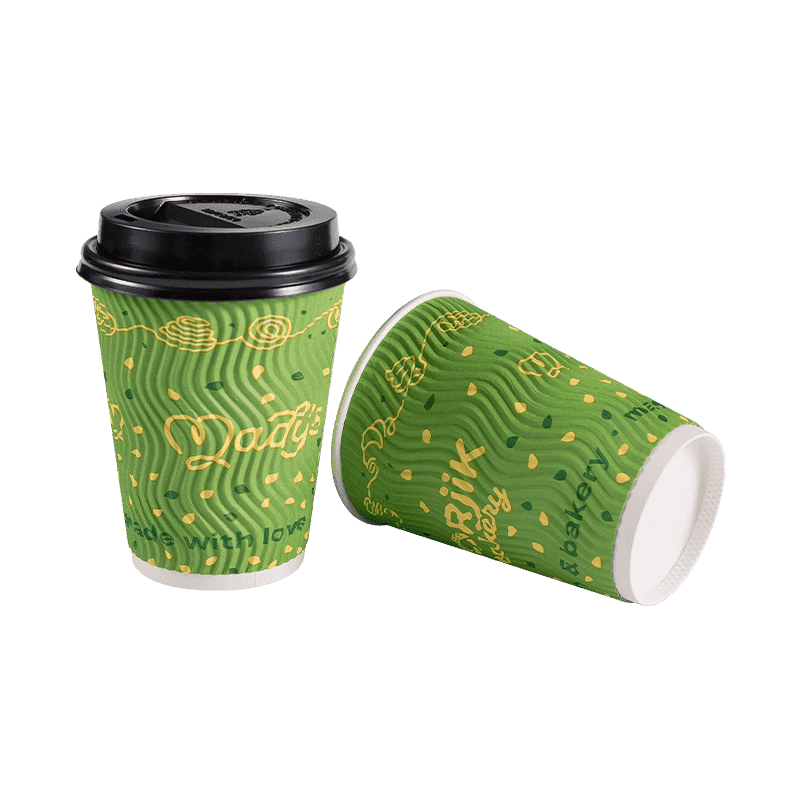
For foodservice operators, retro-printed paper cups function as affordable brand differentiation in a market saturated with generic white or kraft-colored cups. A well-executed vintage design on a 12 oz hot cup adds perceived value without adding meaningful cost — custom-printed cups at volume typically add $0.01–$0.04 per unit over blank equivalents. The same logic applies to event planners: retro-themed cups at weddings, corporate events, and pop-ups generate social sharing that generic servingware never achieves.
The collectible market for original vintage paper cups — particularly unopened sleeves of Dixie cups, promotional cups from defunct drive-ins, and early fast-food chain designs — has grown steadily. Original 1960s–70s promotional cups from McDonald's, A&W, and regional diner chains regularly appear on collector platforms, with rare unopened sets reaching $50–$150 depending on condition and graphic quality.
Paper Cup Production: How Billions of Cups Are Made Each Year
Global paper cup production exceeds 500 billion units annually, making it one of the highest-volume single-use packaging categories in the world. Understanding how paper cups are manufactured — and where the industry's sustainability challenges actually originate — requires following the process from raw material to finished cup.
Raw Materials: Paperboard and Coating
Paper cups are made from solid bleached sulfate (SBS) paperboard — a high-quality, food-grade grade produced from virgin wood pulp. SBS is specified over recycled content for cup stock because recycled fiber can contain contaminants, and the coating adhesion and wet-strength requirements of cup manufacture demand consistent, clean fiber. The paperboard used for cups typically ranges from 170 to 350 gsm (grams per square meter) depending on cup size and whether single-wall, double-wall, or ripple-wall construction is used.
Before cup forming, the paperboard roll is extrusion-coated with polyethylene — typically 15–20 grams per square meter on the food-contact (interior) side, and a lighter coat on the exterior. This PE layer is what gives the cup its liquid barrier. It is also the primary reason paper cups are difficult to recycle conventionally: the paper and plastic layers must be separated, requiring specialized processing that most municipal recycling streams do not provide.
The Cup-Forming Process
Modern cup-forming machines operate at speeds of 200–600 cups per minute for standard hot cup sizes. The production sequence follows a consistent pattern across manufacturers:
- Blanking: Pre-printed and coated paperboard rolls are die-cut into fan-shaped blanks (the flat form that wraps into the cup wall) and circular disc blanks (the cup bottom).
- Wall forming: The fan blank is wrapped around a mandrel (a tapered metal form) and the overlapping seam is heat-sealed using friction or hot air to fuse the PE coating layers together.
- Bottom insertion: The disc blank is inserted and the bottom edge of the wall blank is curled inward and heat-sealed to create a watertight bottom seam — this is called the "bottom skiving and folding" step.
- Top curl: The open top of the cup is rolled outward to form the characteristic rolled rim, which adds structural rigidity and creates a surface for lid seating.
- Quality inspection and packaging: Cups pass through automated inspection systems checking for seam integrity, rim defects, and dimensional consistency before being stacked and sleeved for shipment.
| Cup Type | Typical Paperboard Weight | Coating | Recyclability |
|---|---|---|---|
| Single-wall cold cup | 170–210 gsm | PE (1 side) | Specialist only |
| Single-wall hot cup | 210–260 gsm | PE (2 sides) | Specialist only |
| Double-wall hot cup | 2 × 200–230 gsm | PE (interior) | Limited / specialist |
| PLA-coated cup | 200–270 gsm | PLA bioplastic | Industrial compost only |
Scale, Key Producers, and Industry Trends
The global paper cup market is dominated by a small number of large manufacturers — Huhtamaki, Dart Container, Graphic Packaging, and Solo Cup (now part of Dart) account for a significant share of Western market volume. China is both the world's largest producer and consumer of paper cups, with hundreds of domestic manufacturers supplying the domestic market and export trade.
The most significant production trend of the past decade is the push toward fiber-based barrier coatings — aqueous or dispersion coatings that provide liquid resistance without a plastic film, making the finished cup recyclable in standard paper streams. Several major foodservice chains have piloted or committed to fiber-barrier cups in European markets where extended producer responsibility (EPR) legislation creates financial incentives for recyclable packaging. Adoption in North America has been slower but is accelerating as state-level packaging laws tighten.

 +86-0563-8029081
 +86-0563-8029081
 No. 12 Sanxi Road, Xinqiao Development Zone, Jingde Country, Xuancheng City, Anhui Province.