
 English
 Español
 عربى
At 12:40 p.m., the busiest order window of the day becomes a packaging stress test: soup at 90 °C is poured, the lid clicks shut, and a rider stacks three orders into one insulated delivery bag. Twenty minutes later, condensation pools under the lid, the bottom seam has gone soft, and the main dish has dropped below 60 °C — the temperature at which customers describe food as simply warm.
Selecting paper packaging for food delivery means matching three variables to the route: the barrier coating, the wall structure, and the closure system. Each one fixes a different failure mode, and skipping any of them produces the complaints that show up in reviews: leaks, soggy boxes, and cold fries.
Content
- 1 Start With Ride Time and Food State When Choosing Food Delivery Paper Packaging
- 2 Condensation, Leaks, and Heat Loss: The Three Delivery Packaging Failure Modes
- 3 Barrier Coatings Decide Whether Paper Survives Water, Oil, and Steam
- 4 Double-Wall and Corrugated Paper Slows Temperature Loss During Delivery
- 5 Match Container Geometry to the Menu Category
- 6 Validate With a 15-Minute Field Test Before Ordering Bulk
- 7 Frequently Asked Questions
Start With Ride Time and Food State When Choosing Food Delivery Paper Packaging
The correct package is defined by how long the meal travels and what state the food is in — not by how the container looks on a shelf. A 5-minute counter pickup tolerates packaging that a 40-minute route will destroy.
Hot liquid food attacks the bottom seal and releases steam that condenses on the lid. Crispy dry food fails when trapped steam softens the board and blurs texture. Mixed meals combine both risks in one bag.
 Two-Compartment Kraft Takeout Box with Leak-Resistant SealingThis rectangular kraft box separates main dishes from sides, preserving flavor and appearance while its sealing design prevents leakage during delivery. It suits brands needing an eco-friendly, two-compartment solution that addresses mixed-food condensation and texture risks.View Product →
Condensation, Leaks, and Heat Loss: The Three Delivery Packaging Failure Modes
Condensation, leakage, and temperature loss are separate engineering problems, so a single high-grammage board or one thick coating cannot fix all three. They appear in different places and demand different responses.
| Failure mode | Primary cause | Where it appears | Paper-packaging answer |
| Condensation | Steam from hot food meets a cooler lid or wall | Lid surface, upper sidewall | Air gap, tight lid, minimal headspace |
| Leakage | Coating gaps at the bottom or side seam | Bottom seal, folded corners | PE, PLA, or water-based lining with tested seams |
| Heat loss | Thin walls with no insulation layer | Whole container | Double-wall, corrugated, or sleeve construction |
Measured pattern from side-by-side tests of 12 oz paper cups filled at 90 °C, sealed with lids, and carried in a standard insulated delivery bag. Actual curves vary with cup size, board weight, and ambient temperature.
In side-by-side retention tests of 12 oz paper cups filled at 90 °C, a single-wall PE-coated cup falls through 60 °C at about 12 minutes. A double-wall cup holds the threshold past 20 minutes. A corrugated cup with an air gap and sleeve stays above 60 °C for roughly 30 minutes under the same conditions.
Barrier Coatings Decide Whether Paper Survives Water, Oil, and Steam
The coating, not the paperboard, is what stops moisture from reaching the fiber — and the wrong coating fails precisely where food meets the seam.
| Coating | Service temperature | Moisture and oil resistance | End of life | Best suited to |
| PE lining | Up to ~100 °C short contact | High moisture, medium-high oil | Not home-compostable | Soups, hot drinks, long rides |
| PLA lining | Up to ~60–70 °C | Medium moisture, good oil | Industrially compostable | Cold drinks, salads, light meals |
| Water-based | Up to ~80–90 °C | Good moisture, good oil | Repulpable, recyclable | Brand-led menus, EU and US export |
Double-Wall and Corrugated Paper Slows Temperature Loss During Delivery
An air gap is the most cost-effective insulation you can add to a paper container, which is why double-wall and corrugated cups keep drinks hotter than a single-wall cup made from the same paperboard.
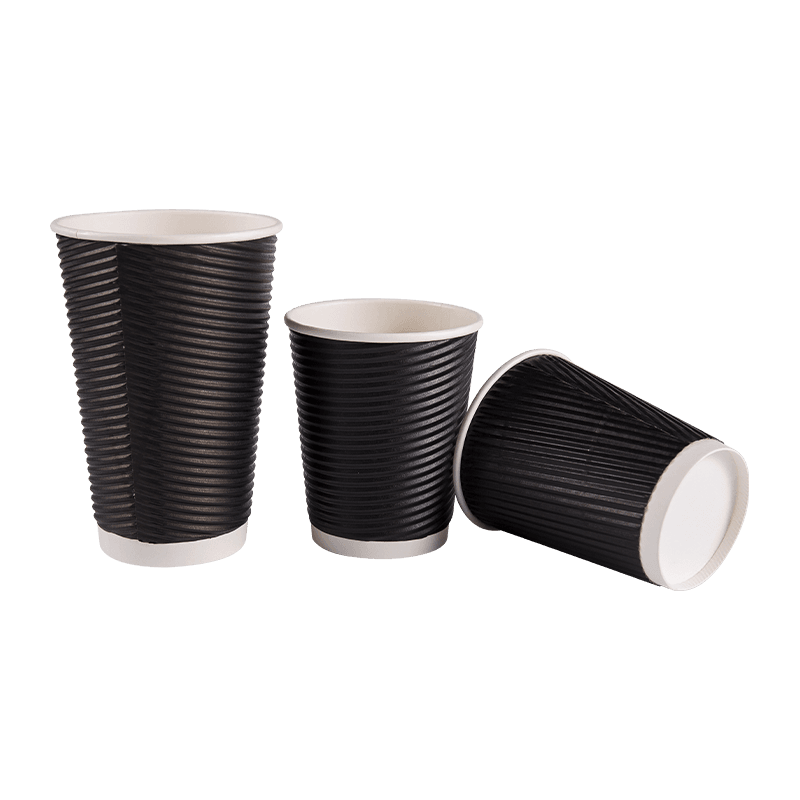
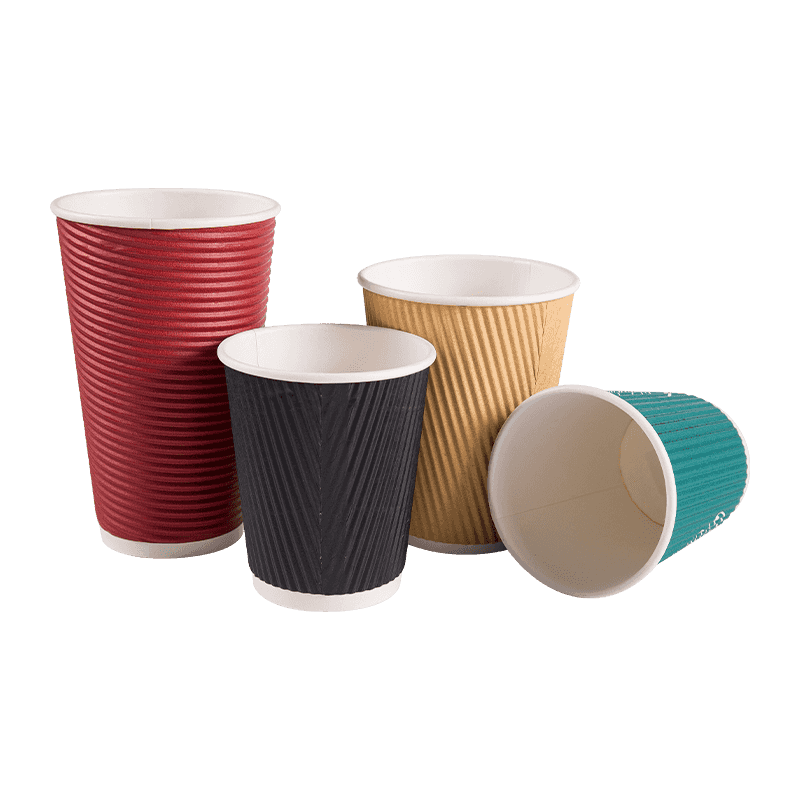
The inner wall holds the liquid; the outer wall stays cooler to the touch; the trapped air between them slows heat transfer. A corrugated ripple wall adds a fluted layer with even more dead-air space. On rides beyond 15 minutes, that difference changes the customer verdict from cold to still hot.
Single-wall cup
- Lower unit cost and lighter carton weight
- Drops below 60 °C in about 12 minutes at a 90 °C fill
- Needs a sleeve or carrier for hot drinks
Double-wall or corrugated cup
- Holds 60 °C plus for 20–30 minutes
- No separate sleeve required
- Higher unit cost and more storage space
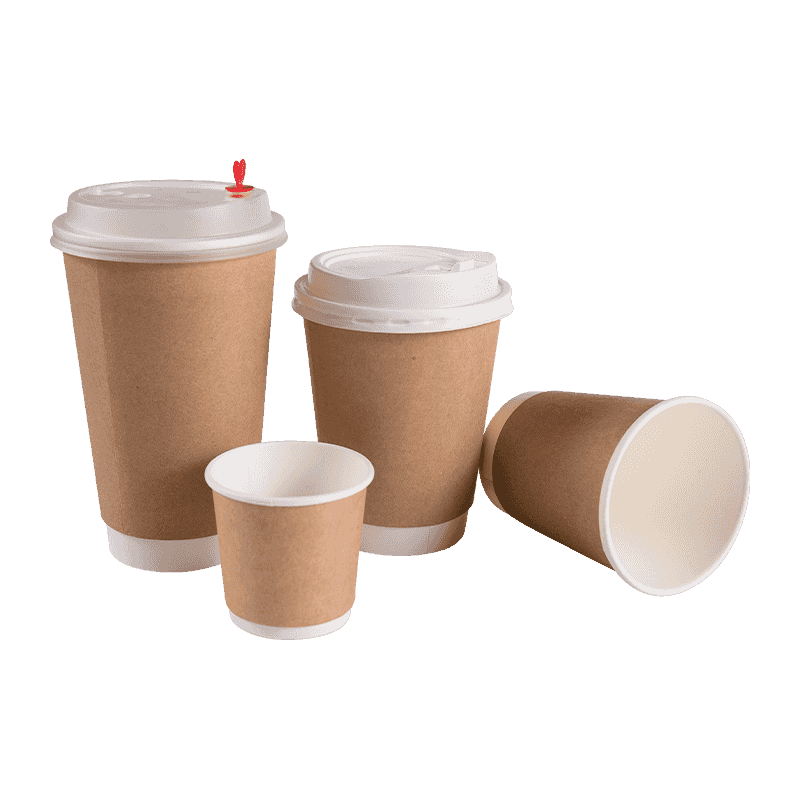
 Kraft Double Wall Take-Out Coffee Cup for Heat InsulationFeaturing a double-layer structure with food-grade inner materials, this cup keeps beverages warm while protecting hands from burns. It offers a practical option for hot drinks, with an eco-friendly kraft outer layer suited for takeaway operations.View Product →
Suppliers such as Xuancheng Bo Site Commodity Co., Ltd. build both single-wall and double-wall formats on the same production line, so you can compare the single-wall versus double-wall paper cup trade-off with the same print, coating, and cup size before committing to volume.
Match Container Geometry to the Menu Category
Every menu category has a container shape that reduces condensation and leaks before they start. Choosing geometry first makes the coating and structure decisions easier.
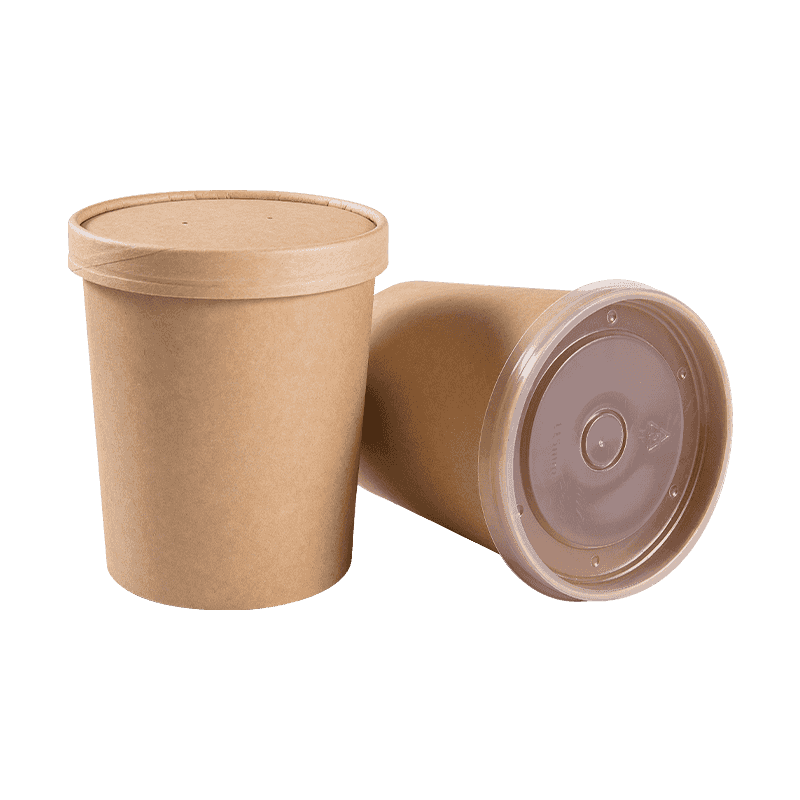 Microwavable Kraft Soup Bowl with Sealed Paper CoverThis disposable kraft bowl is microwave-safe without deformation or harmful release. Its paper cover provides tight sealing to prevent moisture loss, keeping soup warm and fresh. Ideal for takeaway or office lunches where heating and leak prevention matter.View Product →
Validate With a 15-Minute Field Test Before Ordering Bulk
A 15-minute structured test with real food and a real delivery bag predicts more about packaging performance than any spec sheet or sample photo.
- Fill at true serving temperature — heat the soup or curry to 85–90 °C, pour it in, and close the lid exactly as the kitchen would.
- Build a realistic load — place the container in an insulated delivery bag with another hot order and a cold drink.
- Measure at 5, 15, and 30 minutes — record internal temperature, lid condensation, and visible board softening.
- Wipe the seams — press a paper towel against the bottom seal and folded corners at each interval; any wetness indicates a coating gap.
- Repeat on the worst route — a 45-minute route with two transfers, not the 5-minute pickup that flatters the packaging.
Frequently Asked Questions
Should I use PE or PLA coating for hot soup delivery?
For liquid food above 70 °C and rides longer than 15 minutes, PE-lined paper is still the most reliable moisture barrier at a predictable unit cost. PLA-lined and water-based containers can work, but you must verify the coating at your actual serving temperature, because PLA softens in the same range as hot soup.
Why does condensation collect on the lid when the container does not leak?
Condensation is a physics problem, not a leak. Steam rises from hot food and turns back to water when it touches the cooler lid. A tight-fitting lid with minimal headspace, a corrugated wall with an air gap, or a paper lid with a slightly absorbent surface reduces dripping, though some condensation is unavoidable in sealed containers.
How long can a double-wall paper cup keep a hot drink above 60 °C?
In typical side-by-side tests starting at 90 °C, a double-wall cup holds 60 °C plus for 20–25 minutes, and a corrugated cup for 30 minutes or more, compared with about 12 minutes for a single-wall cup. Exact time depends on ambient temperature, bag insulation, and cup size.
Can compostable paper containers handle greasy fried food?
Yes, if the coating matches the food. Water-based and PLA coatings block grease at moderate temperatures, and bagasse trays resist oil and moisture well. Adding a greaseproof paper insert creates a second barrier for fries, fried chicken, and heavily sauced items.
 +86-0563-8029081

 +86-0563-8029081
 No. 12 Sanxi Road, Xinqiao Development Zone, Jingde Country, Xuancheng City, Anhui Province.
