
 English
 Español
 عربى
عربىA coffee chain ordered clear PET lids for a hot-tea rollout and watched the rims distort within the first ten minutes of service; a slush operator chose PS lids and found stress cracks in the freezer. The common mistake is treating polymer name as the whole specification. PP, PET, PS, and PLA cup lids differ sharply in thermal resistance, clarity, and recycling codes: PP holds past 100 C, PET distorts near 70 C, PS offers glass-like clarity but brittle edges, and PLA requires a separate compost route. This guide compares PP vs. PET vs. PS vs. PLA cup lids across thermal resistance, clarity, and recycling codes, with service ceilings, haze levels, and resin-code realities a buyer can put directly into an RFQ.
Content
- 1 Thermal Resistance Limits of PP, PET, PS, and PLA Cup Lids
- 2 Clarity and Haze: What Customers See Before the First Sip
- 3 Recycling Codes on Cup Lids Do Not Guarantee Recycling
- 4 Cup Lid Specification Matrix: PP vs PET vs PS vs PLA
- 5 Match Lid Polymer to Serving Temperature, Then to Story
- 6 Frequently Asked Questions about Cup Lid Materials
Thermal Resistance Limits of PP, PET, PS, and PLA Cup Lids
PP is the only one of the four polymers that keeps its geometry in thin-wall lid form at 95 C; PET, PS, and PLA fail below that, each with a different failure mode. Injection-moulded polypropylene lids sustain around 100 C, which covers tea, brewed coffee, and hot chocolate hold times. Polystyrene handles brief exposure up to 85 to 90 C, but its failure mode combines softening with brittle cracking on flexing. PET distorts above roughly 65 to 70 C because its glass-transition temperature sits near 70 C. Standard PLA softens between 50 C and 60 C unless the polymer is crystallized into CPLA.
The operative numbers are service temperatures, not datasheet melting points. A typical cup lid is 0.3 to 0.5 mm thick, far thinner than the 3.2 mm ASTM test bars suppliers quote. Thin-wall parts experience heat deflection 15 to 20 C below bulk datasheet values, so a lid with a resin spec of 110 C should still be treated as a 100 C part. For polystyrene, marketing labels such as super heat resistant deserve scrutiny; the risk profile of high-temperature PS covers documents the distortion and cracking that appear when PS lids are pushed toward 100 C.
For operators, the thermal consequence is practical: a hot-drink lid must keep its snap-fit seal against the cup rim while the beverage sits at 80 to 90 C for the first ten minutes. PP preserves that sealing force; the other three polymers progressively lose their rim engagement as temperature climbs.
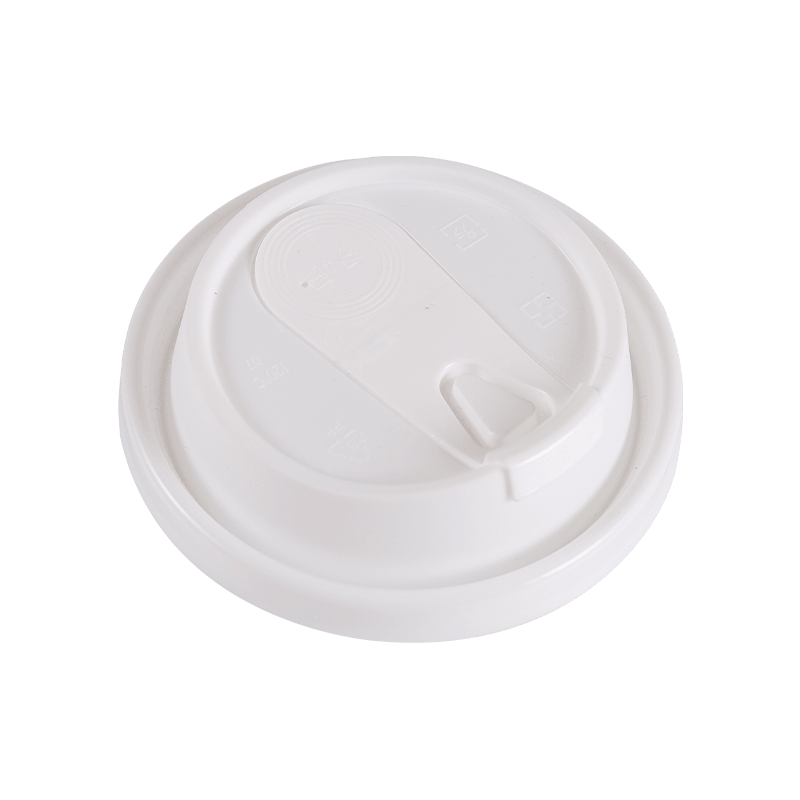 Leak-proof Injection Molded PP Multifunctional Switch Cover with Folding Stopper U-shape VThe Leak-proof Injection Molded PP Multifunctional Switch Cover with Folding Stopper U-shape V-shape is made from high-quality polypropylene (PP) material through inje...View Product →
Clarity and Haze: What Customers See Before the First Sip
PET and PS are the only two materials in this group that read as crystal clear on a service counter; PP is translucent, and PLA sits between them depending on crystallinity. Lid clarity changes the perceived value of iced coffee, cold brew, juice, boba, and lemonade. A cloudy lid dulls the drink; a glass-like dome makes the same drink look premium at the point of sale.
| Material | Light transmission | Visual appearance |
| PET | above 90% | glass-like, bright rim glow |
| PS | above 90% | glass-like, bright but brittle edges |
| PLA | 85 to 90% | clear with slight warm tint |
| PP | 75 to 85% | translucent, milky, softened edges |
The optical ranking does not match the thermal ranking. The clearest lids, PET and PS, are cold-to-warm materials; the hottest lid, PP, is the haziest. The serve-temperature logic explains the trade-off: hot drinks hide haze behind printed cups, while cold drinks put the beverage on display. For iced programs where clarity is a sales point, PET is the standard; the detailed analysis of PET lid properties explains why PET beats PS in flex-crack behaviour on strawless and dome designs.
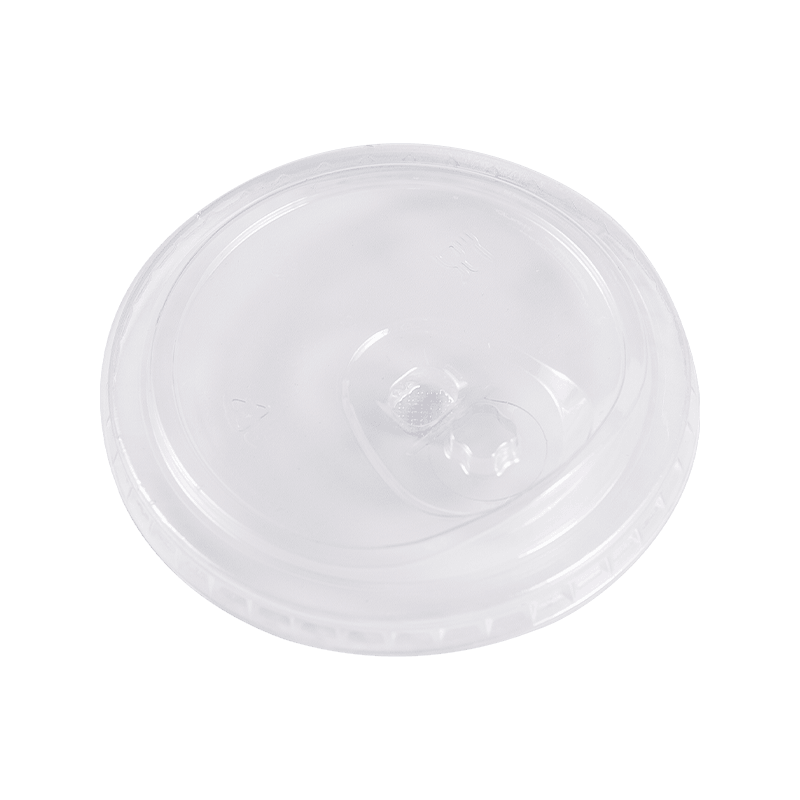 Disposable Transparent Plastic PET Cup Cover without StrawDisposable Transparent Plastic PET Cup Cover without Straw is made from high-quality food-grade PET material. With its great transparency, this cup cover not only show...View Product →
Recycling Codes on Cup Lids Do Not Guarantee Recycling
A recycling code identifies polymer chemistry, not the environmental outcome of a used lid; the actual path depends on local sorting equipment, dimensional rules, and end markets. PET cup lids carry resin code 1, PP lids code 5, PS lids code 6, and PLA lids code 7. The code tells a recycler which polymer family an item belongs to; it does not promise curbside acceptance.
- Size screening: most material recovery facilities sort small items out of the plastic stream, and lids under about two inches frequently fall through screen openings into residue.
- Sensor input: black lids absorb near-infrared light and are ignored by optical sorters, so dark PS coffee lids often bypass the plastics sort entirely.
- End markets: resin code 1 PET has strong demand, code 5 PP has growing but regionally uneven demand, code 6 PS has weak demand, and code 7 PLA usually has no conventional recycling outlet.
PLA adds a second complication: the code 7 label consumers read as recyclable actually signals a bioplastic that belongs in an industrial composting line certified to ASTM D6400 or EN 13432. PLA lids entering a PET stream contaminate the batch and can reduce the clarity of recycled PET. Compostable PLA lids work only when the operator controls the waste route, which is why successful quick-service compost pilots include a visible bin pair and explicit sorting signage.
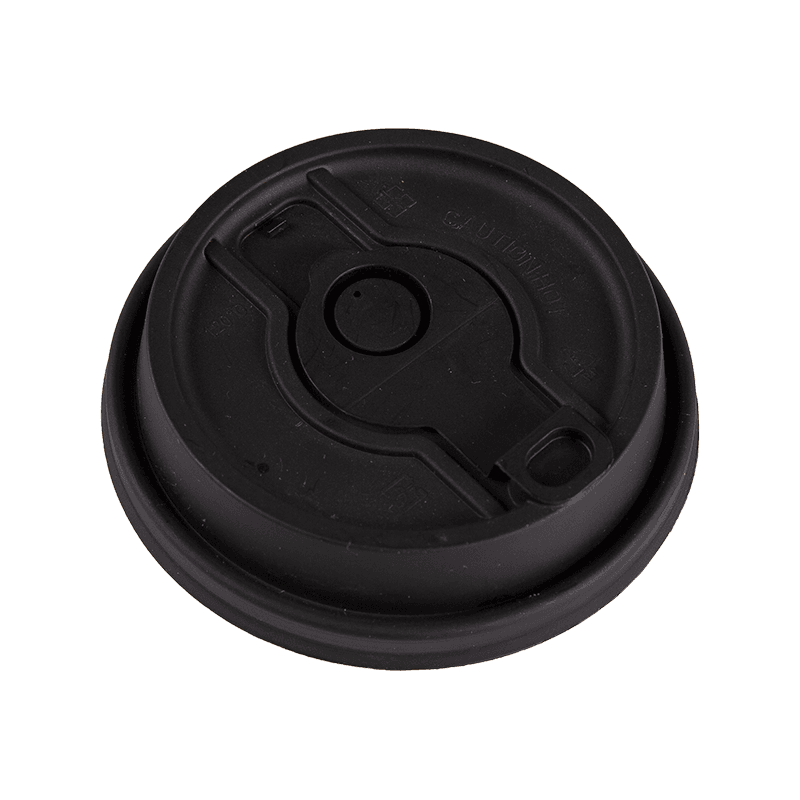 Disposable Leak-proof Plastic PLA Eco-friendly Hot Drink Cup Cover with Straw CoverDisposable Leak-proof Plastic PLA Eco-friendly Hot Drink Cup Cover with Straw Cover is convenient and safe, adhering to eco-friendly principles. Made from advanced bio...View Product →
Cup Lid Specification Matrix: PP vs PET vs PS vs PLA
Use this matrix as a single-page reference before sending an RFQ; a complete lid spec should state polymer, resin code, service temperature, clarity target, and diameter in one document.
| Attribute | PP | PET | PS | PLA |
| Resin code | 5 | 1 | 6 | 7 |
| Service ceiling | about 100 C | about 70 C | about 88 C | about 55 C |
| Clarity | translucent | high | high | moderate |
| Flex crack resistance | excellent | good | poor | fair |
| Typical lid styles | dome, hinged plug | strawless, cold dome | flat coffee, black lid | spout, hot drink bio |
| End of life | code 5 recycling | code 1 recycling | code 6 rarely recycled | industrial compost |
Match Lid Polymer to Serving Temperature, Then to Story
The decision order is fixed: serving temperature first, clarity second, waste messaging third, and budget last, because a penny saved on polymer is lost if the lid fails on the cup.
- Set the temperature: 85 C or above forces PP; between 65 C and 85 C, PS is viable but brittle; below 65 C, PET, PS, and PLA are all structurally possible.
- Choose the look: if the drink leaves the building in a clear cup and the lid is part of the display, use PET or PS; if the lid is secondary to the cup print, translucent PP is acceptable.
- Check the waste claim: confirm that the facility serving the lids has a code 5 or code 1 buyer, or a certified compost hauler, before printing any environmental claim.
- Ask for certificates: request FDA 21 CFR compliance, BPI or TUV Austria for PLA compost claims, and an ISO injection-moulding process record for lid dimensional tolerance.
Frequently Asked Questions about Cup Lid Materials
The shortest answer to the four most common buyer questions is: PP for hot, PET for cold display, PS for low-budget clear, and PLA only with a certified compost route.
Can PET cup lids be used for hot coffee?
No. PET lids deform around 65 to 70 C, which is far below typical hot coffee fill and hold temperatures. Use PET for iced coffee, cold brew, juice, and room-temperature beverages only.
Is PS a safe lid material for hot drinks?
PS is food-safe and used widely for black coffee lids, but its practical ceiling is near 88 C and the material is brittle. Hinged wings and flip plugs on PS lids crack easily under flexing, especially in cold weather.
Is a PLA lid recyclable or compostable?
A certified PLA lid is industrially compostable under ASTM D6400 or EN 13432, but it is not recyclable in most municipal streams and contaminates PET recycling. It requires a controlled separate collection route.
Which lid polymer gives the clearest look and the best crack resistance?
PET gives the best combination: clear optics similar to PS, with better flex-crack behaviour on strawless and dome designs. PP is the most crack-resistant but only translucent; PS is clear but prone to fracture.
 +86-0563-8029081
 +86-0563-8029081
 No. 12 Sanxi Road, Xinqiao Development Zone, Jingde Country, Xuancheng City, Anhui Province.