
 English
 Español
 عربى
عربىAt a trial run in Xuancheng, China, a lot of double wall kraft paper cups filled with 92°C water held an exterior surface temperature of 44°C after ten minutes. A single wall cup from the same production line reached 61°C under identical conditions. That 17°C difference is why hot beverage programs specify double wall construction. The same trial exposed a second variable: when the kraft outer layer shifted 0.8 mm during lamination, a four-color logo printed across the side seam lost registration. Buyers comparing heat retention with brand printing on double wall kraft paper cups need to evaluate both, because the same laminated structure controls them.
Content
- 1 Why the Air Gap Decides Heat Retention in Double Wall Kraft Paper Cups
- 2 Reading a 10-Minute Surface Temperature Test
- 3 How Kraft's Brown Surface Changes Brand Printing Definition
- 4 Heat Retention vs. Brand Printing Definition on Double Wall Kraft Cups
- 5 Checklist Before You Specify Double Wall Kraft Cups
- 6 Frequently Asked Questions
Why the Air Gap Decides Heat Retention in Double Wall Kraft Paper Cups
The air gap between the inner cup and the outer sleeve is the single structural feature that determines hand comfort. Still air conducts heat at roughly 0.026 W/m·K, about one-sixth of the thermal conductivity of solid paperboard, so a 2 mm trapped layer reduces heat transfer more effectively than simply adding paper thickness.
Double wall construction also adds a second barrier against liquid migration and strengthens the cup wall against crushing during lid application. Tooling differences change performance:
- Standard double wall: 1.5–2.5 mm gap; exterior surface runs 15–20°C cooler at five minutes.
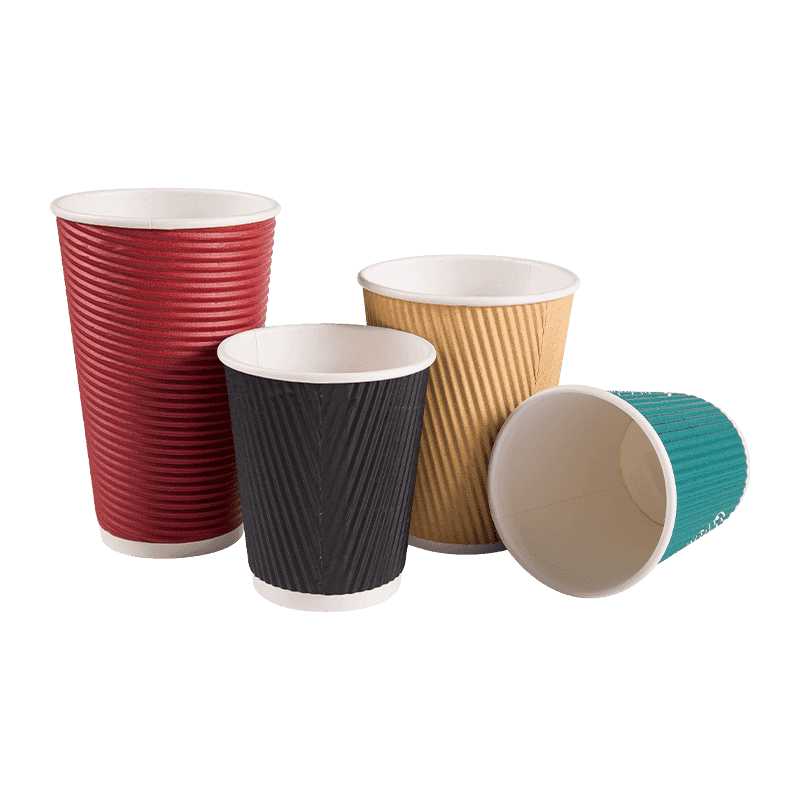
- Ripple wall: 2–4 mm gap with a corrugated spacer; exterior runs 18–25°C cooler.
- Sealed air-pocket structures: 10–15% longer beverage warmth than standard double wall at the same paper basis weight.
A 2 mm static air gap can reduce exterior surface temperature by up to 25°C at five minutes compared with a single wall cup of the same basis weight.
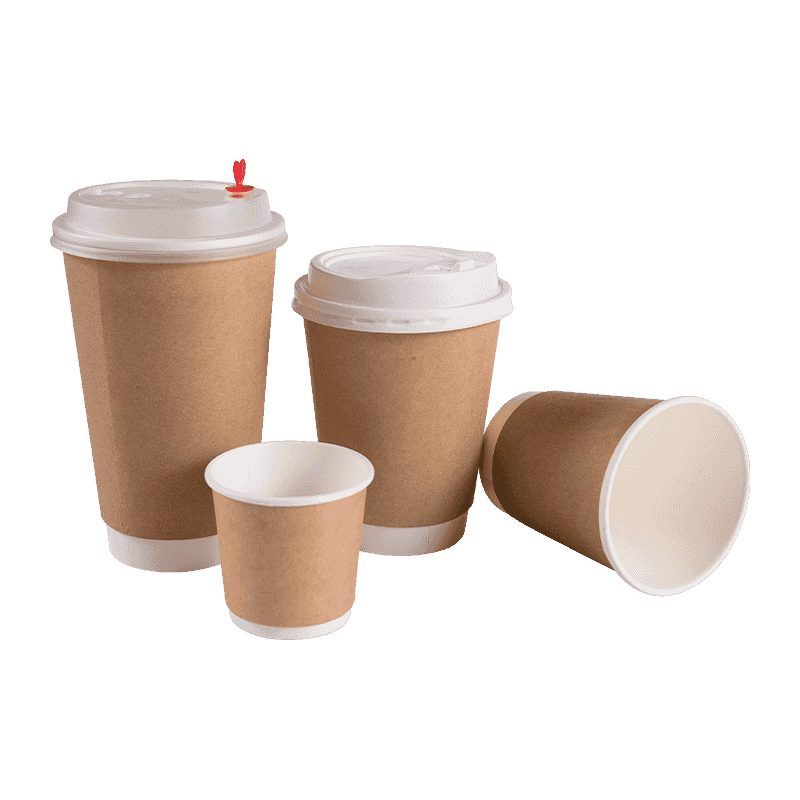
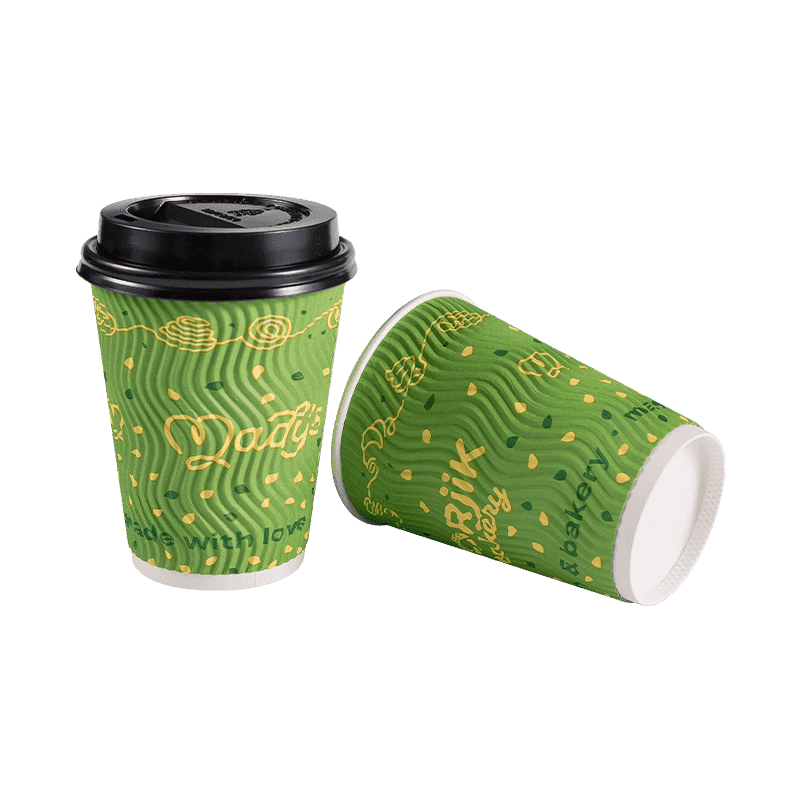
 Eco-Friendly Kraft Double Wall Coffee CupThis cup's outer kraft layer and inner food-grade barrier create an insulating air gap that reduces surface heat. If you are comparing takeout cups for thermal performance, this design directly answers the temperature question.View Product →
Reading a 10-Minute Surface Temperature Test
A 10-minute surface temperature test is the fastest way to benchmark double wall kraft cups because it measures exactly what the customer feels on the outer wall.
The protocol: fill the cup with 90°C water, cover it with a standard lid, and record the exterior temperature at the midpoint of the outer wall at one, five, and ten minutes in a 22°C room. The chart below compares three cup structures on the same 12 oz format.
Exterior surface temperature over 10 minutes
12 oz cups filled with 90°C water; surface probe at the midpoint of the outer wall.
| Time after fill | Single wall | Double wall | Ripple wall |
| 1 minute | 72°C | 48°C | 52°C |
| 5 minutes | 68°C | 45°C | 49°C |
| 10 minutes | 63°C | 43°C | 46°C |
Two readings matter most. The one-minute value tells you whether the cup is safe to pass to a customer immediately after pouring. The ten-minute value tells you whether the drink remains comfortable to hold through the typical consumption time of a hot beverage.
Acceptance criteria used by export packaging buyers: exterior temperature below 50°C at one minute for bare-hand carry, and a beverage temperature drop of no more than 8°C over ten minutes for seated service.
How Kraft's Brown Surface Changes Brand Printing Definition
Kraft paper's natural brown tone absorbs light differently from white stock, so brand printing definition depends on ink opacity, coating coverage, and the number of print stations rather than the number of colors in the artwork.
A brown substrate acts as an extra color in every print job. Light inks such as yellow and light blue turn muddy where coverage is thin, while dark inks read cleanly. Three production routes are common on double wall kraft cups:
- Direct-to-kraft flexographic printing: four to six spot colors; the brown face becomes a deliberate design element.
- White-lined outer wall: a white clay or water-based barrier layer behind the print delivers CMYK-like contrast.
- Coating-aware printing: PLA and water-based coatings need corona or flame treatment before flexo inks will anchor to the surface.
Print definition on kraft cups is the clarity of type edges, the tonal range in the artwork, and the color accuracy against the approved brand proof, measured on the final coated wall.
| Print method | Process | Max colors | Definition profile | MOQ guidance |
| Flexographic | Spot color plates, rotary application | 4–6 | Solid logo blocks, clean type edges | 50,000+ |
| UV offset | Photographic plates on flat sheets | 6 | High detail, smooth tonal range | 20,000+ |
| Digital | CMYK inkjet without plates | Full CMYK | Good contrast; slight banding on kraft | 500–2,000 |
For full-color brand work, the white-lined outer wall is the practical choice. It adds cost per cup, but it prevents the washed-out result of printing light colors directly on brown fiber.
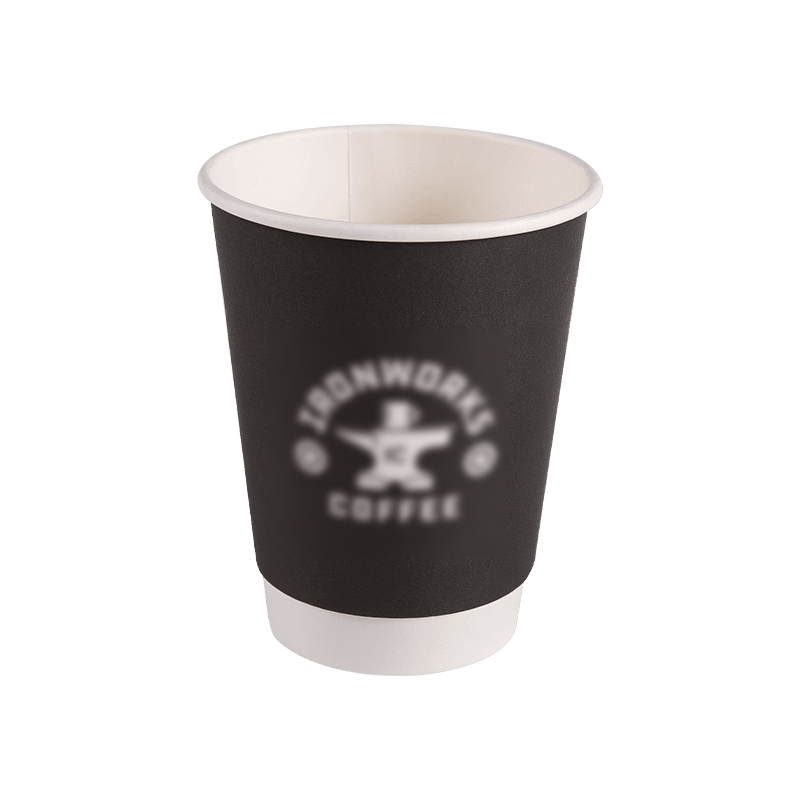 Customizable Double Wall Takeaway Paper CupThe white-lined outer wall supports full-color printing and the double-layer structure retains drink temperature. When brand colors matter, this cup combines clean graphics with practical insulation for coffee shops.View Product →
Heat Retention vs. Brand Printing Definition on Double Wall Kraft Cups
Heat retention and print definition are not opposing goals on a double wall cup; both depend on the same laminated structure, so the real trade-off sits in material layering and press setup.
Two specification paths show the balance:
Heat-first specification
- Base paper 240–270 gsm
- Wider air gap, PE or PLA lining tuned for insulation
- One- or two-color logo on natural kraft
- Lower cost per unit; maximum hand comfort
Print-first specification
- White-lined kraft outer wall, 300 gsm
- Six-color flexo or UV offset
- Air gap reduced to 1.5 mm for wall stiffness
- Full-color illustration; slightly warmer at 5 minutes
The lamination step controls the trade-off. If the inner cup and outer sleeve are bonded with uneven tension, the print can shift by 0.5–1 mm across the side seam and the air gap becomes inconsistent around the circumference. A manufacturer that controls lamination tension in-house can keep double wall kraft paper cups within tighter tolerances; Xuancheng Bo Site Commodity Co., Ltd., for example, handles design, printing, and cup forming under one roof, which shortens the feedback loop between press and production line.
If the bond tension varies, the print shifts and the gap wanders; both defects trace to one lamination setup.
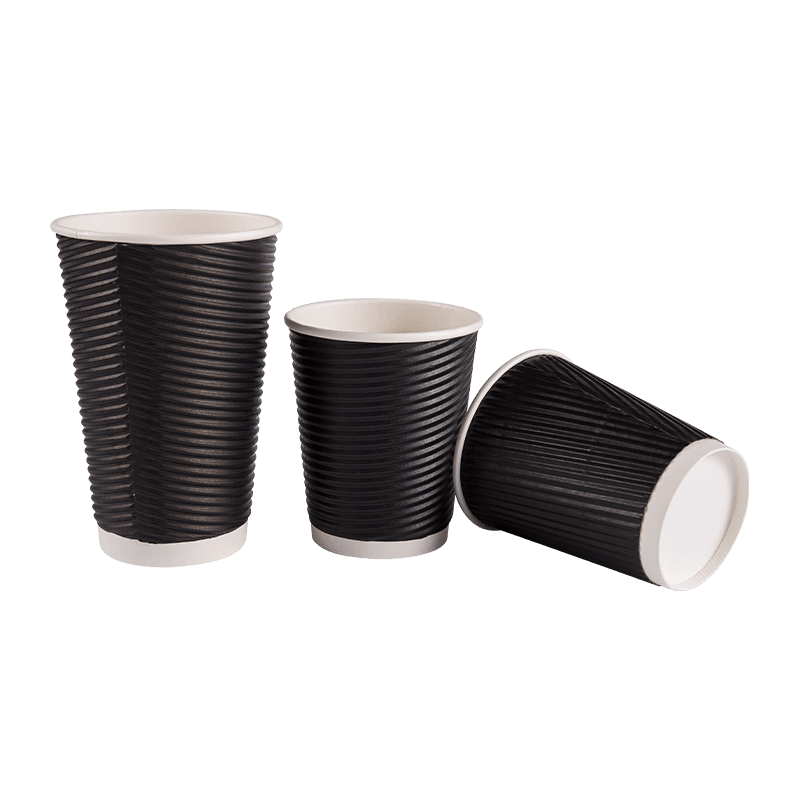
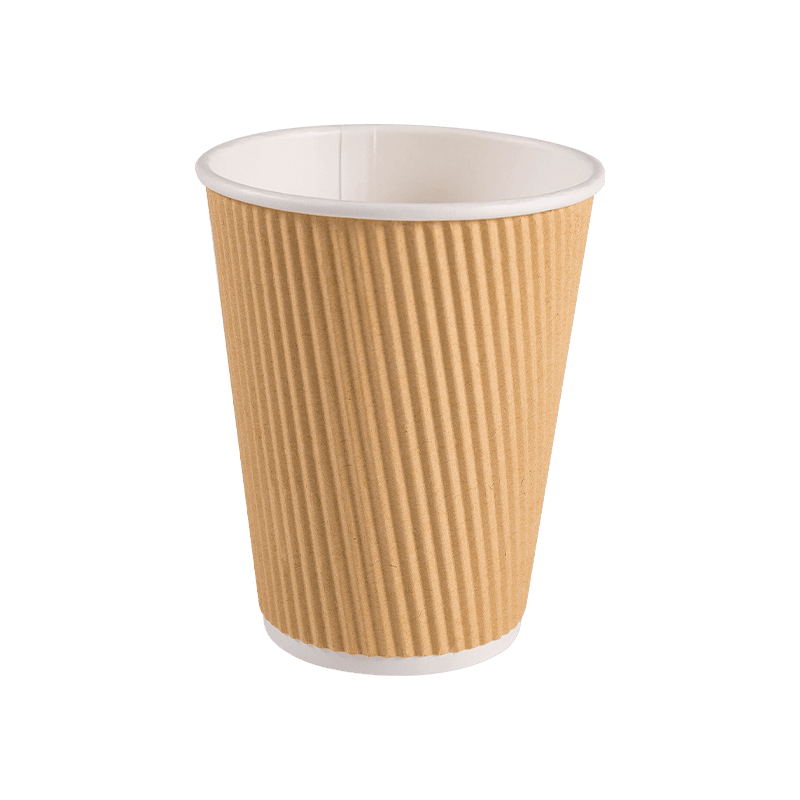 Insulated Ripple Double Wall Hot Drink CupIts ripple structure forms an air gap that extends heat retention and adds structural stability, while waterproof layers keep hands safe. This cup is a suitable choice if you need both insulation and dependable print quality.View Product →
Checklist Before You Specify Double Wall Kraft Cups
Use this checklist when you compare supplier samples, because the cup structure and the print system are evaluated as one assembly.
- Confirm the air gap: cut a cup and measure the gap at four points around the circumference; variance above 0.3 mm indicates lamination drift.
- Request a 5-minute exterior temperature report with the exact test conditions: fill temperature, room temperature, lid type, and probe position.
- Ask for a wet-ink proof printed on the actual kraft stock, not on white swatch paper.
- Inspect the side seam: printed seams that split during forming are a lamination tension failure, not a paper defect.
- Verify lid compatibility: a thicker double wall rim changes the top curl diameter; test your lid stock against the cup.
Sample-stage approval happens at low speed. Production runs use flexographic plate pressure that varies, so demand written tolerances: a color shift under Delta E 3 and print registration of plus or minus 0.5 mm are realistic for flexo on kraft.
Bottom line: white-lined double wall cups with six-color flexo give the best print definition; direct-to-kraft with a two-color logo maximizes the heat-retention benefit per dollar.
Frequently Asked Questions
Are double wall kraft cups better at heat retention than single wall cups?
Measured on the exterior surface, yes. Under the 10-minute protocol above, a standard double wall cup stays 15–20°C cooler than a single wall cup of the same paper weight because the trapped air layer blocks conductive heat transfer.
Can you print full-color logos on brown kraft double wall cups?
Yes, with one condition: the substrate color limits light inks. For photorealistic or light-colored artwork, specify a white-lined outer wall. For two-color or vintage designs, direct-to-kraft flexographic printing gives strong definition at a lower cost.
What coating works best on printed double wall kraft cups?
PLA and water-based coatings are the most common compostable barriers; PE remains the lowest-cost waterproof option. Ink adhesion must be tested on the final coating because PLA and water-based surfaces are less polar than PE and may reject standard flexo inks without surface treatment.
Does double wall construction keep the drink warmer or only the cup cooler?
Both. The same air gap that keeps the outer wall cool also slows heat loss from the beverage. Comparable cup trials show the beverage temperature drop over ten minutes is about 2–4°C smaller in a double wall cup than in a single wall cup of the same material.

 +86-0563-8029081
 +86-0563-8029081
 No. 12 Sanxi Road, Xinqiao Development Zone, Jingde Country, Xuancheng City, Anhui Province.